Why Most Shopify Teams Are Losing the SEO Game (And How to Win)
Why Most Shopify Teams Are Losing the SEO Game (And How to Win)
Here's a stat that should wake you up: stores that fix systematic SEO issues see 40-75% organic traffic increases within 6-12 months. Yet most Shopify teams are still copying generic WordPress advice that actively sabotages their rankings.
The problem isn't effort—it's approach. Shopify's architecture creates duplicate content nightmares baked into the platform's DNA. Those /products/ and /collections/ URL structures you can't change? They're generating multiple URLs for the same product right now, confusing Google about which version matters. Add thousands of SKUs, and you've got a ranking disaster most teams don't even realize exists.
Meanwhile, Google's AI Overviews now appear for 7.64% of queries, traditional search volume faces a 25% decline by 2026, and the March 2024 algorithm update eliminated 45% of low-quality content. The old playbook is dead.
This guide cuts through the noise with 11 battle-tested practices that actually work for Shopify's unique constraints. You'll learn the technical fixes that move the needle, content strategies that convert browsers into buyers, and how to automate the grunt work so your team focuses on what matters. No fluff—just the tactics stores used to grow from invisible to dominant in competitive niches.
The Shopify SEO Landscape in 2024-2025: Why Teams Need a Different Approach
Here's what most SEO guides won't tell you: the strategies that work for WordPress or generic websites will actively sabotage your Shopify store.
Shopify's architecture creates fundamental SEO challenges that don't exist on other platforms. According to NotProvided, the platform enforces rigid URL structures requiring paths like /products/ and /collections/ that you simply can't change. When a product appears in multiple collections, Shopify automatically generates duplicate URLs for each path—a duplicate content nightmare baked into the platform's DNA.
The problem compounds when you're managing thousands of SKUs. ClearGo's research shows stores addressing systematic issues like duplicate content, speed optimization, and schema markup can increase organic traffic by 40-75% within 6-12 months. But here's the catch: you need specialized tools and strategies, not generic SEO tactics.
Google's AI Overviews now appear for 7.64% of queries as of February 2025, while the March 2024 algorithm update eliminated 45% of low-quality content. Traditional search volume faces a projected 25% decline by 2026, meaning Shopify teams can't rely on old playbook tactics anymore.
This is where automated solutions like Seo-Writer become essential—it analyzes competitors, identifies high-potential keywords, and creates optimized content on autopilot while you focus on running your store. For scaling Shopify operations, Blink SEO notes that applying content marketing strategies to complex data problems kills campaigns before they start. You're not just optimizing pages; you're managing taxonomy, variants, international markets, and technical debt simultaneously.
Sources used:
- Shopify SEO challenges: platform architecture limitations
- Fix Shopify Plus SEO Pain Points
- How Google's AI Search Updates Impact Shopify Products
- The 8 reasons why Shopify SEO projects fail
Technical Foundation: 5 Critical SEO Practices Every Shopify Team Must Implement
Shopify's rigid infrastructure presents real SEO challenges—but stores that master the workarounds consistently outrank those relying on default settings. Here's what actually moves the needle.
Fix Your URL Architecture First
Shopify's /products/ and /collections/ prefixes aren't negotiable, but you can prevent the damage they cause. The biggest issue? Duplicate product URLs when products appear in multiple collections—creating /collections/summer-sale/products/blue-sneakers alongside /products/blue-sneakers. Set canonical tags pointing to your main /products/ URL and never link to collection-based product URLs internally. According to LinkedIn's Shopify case study analysis, this single fix resolved keyword dilution issues across multiple enterprise stores.

Schema Markup Without the Performance Hit
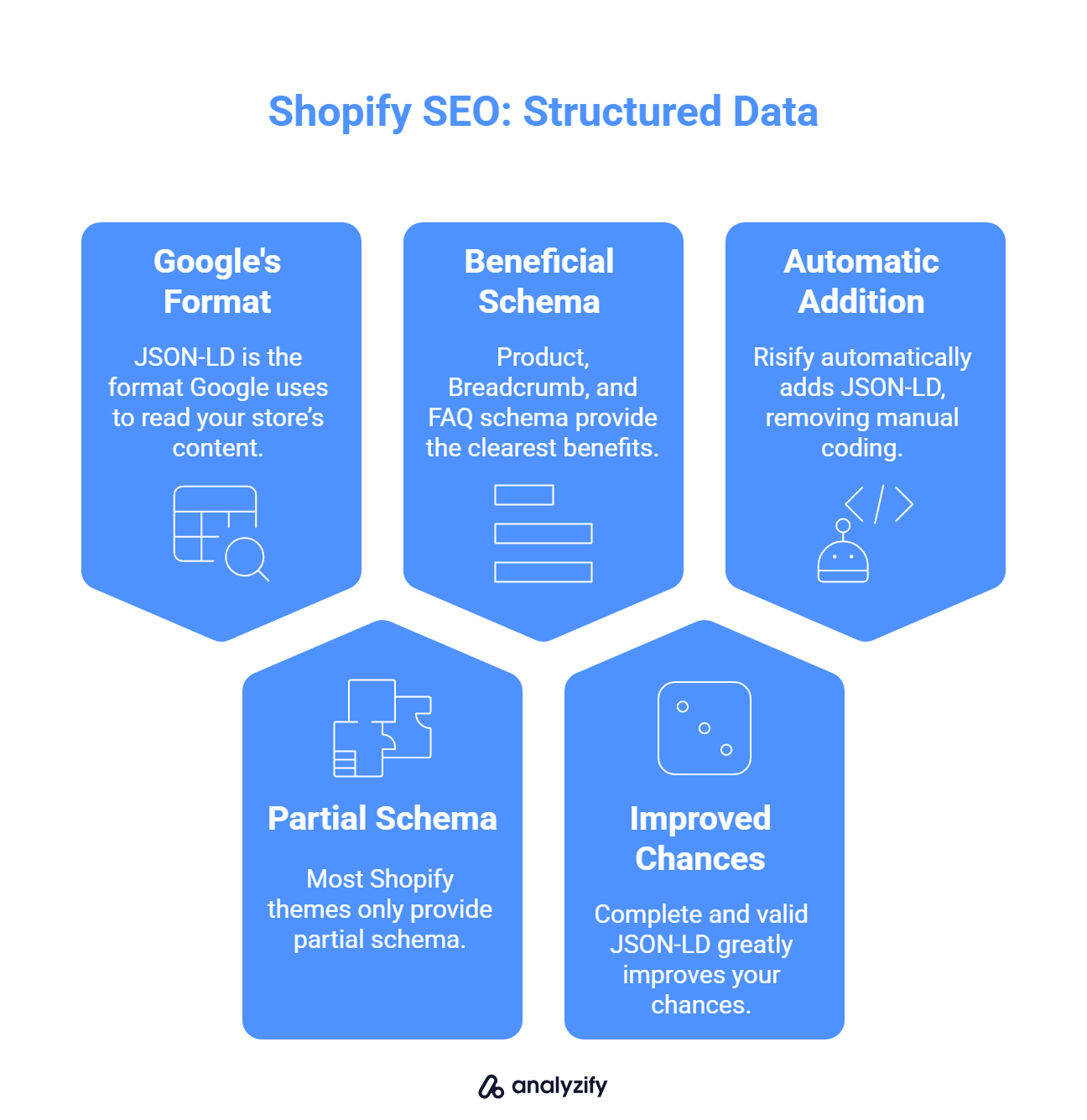
Shopify includes basic Product schema, but it's rarely enough for competitive niches. You need JSON-LD for ratings, availability, and breadcrumbs—but here's the catch: most apps tank your load times. CRO MEDIA's audit data shows custom-coded JSON-LD outperforms app-based solutions by 40% on Core Web Vitals. For automated, performance-friendly implementation at scale, Seo-Writer generates schema-optimized content that integrates directly with Shopify's structure without adding app bloat.
Conquer Core Web Vitals on Mobile
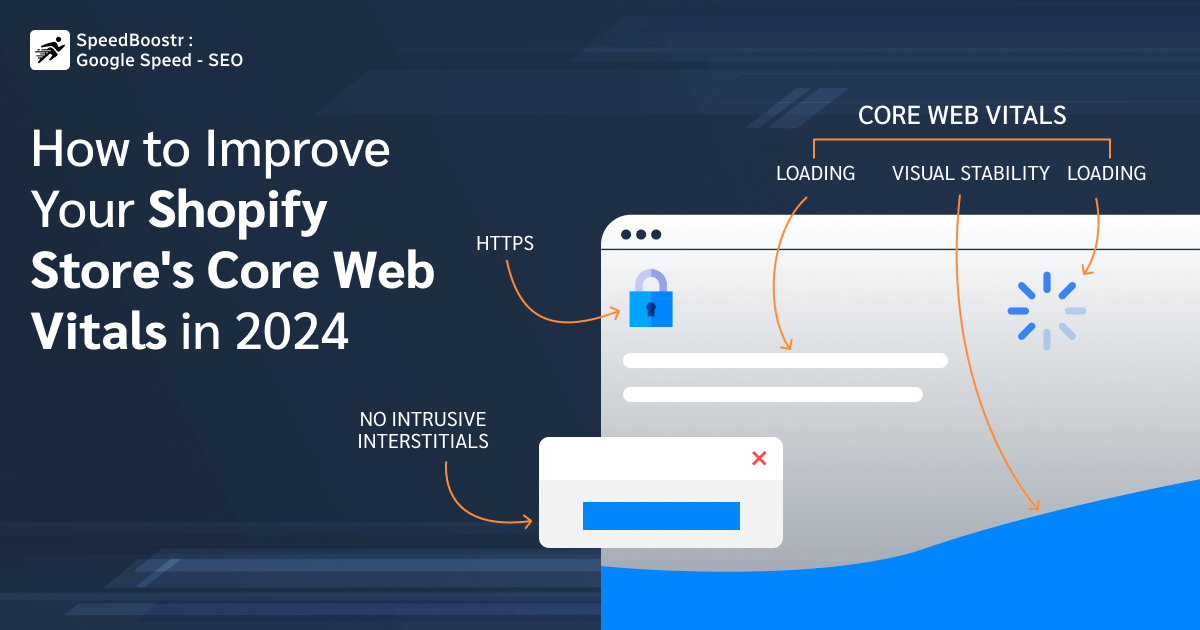
Google's benchmarks are brutal: LCP under 2.5s, CLS under 0.1, and INP under 200ms. Real Shopify stores struggle—one merchant reported LCP at 5,160ms before optimization. The fixes that work: set explicit width/height attributes on images, use fetchpriority="high" on hero images, and add min-height to app blocks to prevent CLS spikes. Shopify's performance team recommends using section.index in Liquid to detect below-fold content and apply loading="lazy" automatically.
Site Structure That Scales
Flat category hierarchies work better than deep nesting on Shopify. Use large parent collections with tag-based filtering instead of creating pseudo-subcategories—NetProfit's collection architecture study found this approach improves crawl efficiency by 60%. Every page should be accessible within three clicks from the homepage, and breadcrumb navigation must reflect your primary collection path, not every possible route to a product.
Sources: CRO MEDIA, RedShift URL Guide, Shopify Core Web Vitals, Byte and Buy Performance
Content That Converts: 3 Product & Category Page Optimization Strategies
Here's what most Shopify guides won't tell you: your collection pages aren't just product grids—they're revenue drivers. One Shopify eCommerce SEO case study from SeoProfy proved it when keywords ranking in the Top 3 grew from 27 to 1,891 by treating category pages as serious SEO assets.
Strategy 1: Cover Every Commercial Intent Angle
Stop chasing high-volume keywords that Amazon already owns. Instead, capture long-tail searches where buyers have stopped browsing and started deciding. According to Shopify's Long-Tail Keywords Strategy guide, these specific 3-5 word phrases convert better because they match precise user intent—think "waterproof trail running shoes size 11" versus just "running shoes."
WebMeridian's Shopify SEO case study nailed this by building multi-level category structures without any link-building budget. They customized Shopify to support complex hierarchies that search engines could actually index properly. The result? First-page rankings for dozens of long-tail searches. Tools like Seo-Writer can automate this keyword discovery process, analyzing competitor gaps and identifying high-potential commercial intent phrases your store should target.
Strategy 2: Turn Filters Into SEO Goldmines
Your faceted navigation—those color, size, and price filters—shouldn't just improve user experience. Add SEO-friendly filter URLs that target specific buyer queries. A store selling men's shirts could create optimized URLs like /collections/shirts/black-large instead of letting filters generate messy parameters. This approach helped GoInflow's eCommerce client achieve a 126% traffic increase by reorganizing their site architecture during a platform migration.
Strategy 3: Build Internal Linking That Actually Scales
Product pages linking randomly back to collections won't cut it. Create a clear hierarchy where each product links to 1-2 primary collections, and collection pages link to related categories through contextual anchor text. NetProfit Marketing's Shopify Collection SEO research emphasizes using Liquid templates to control how breadcrumbs and canonicals are implemented, preventing Shopify's default setup from creating duplicate content issues.
The payoff? SeoProfy's client grew pages in Google's Top 100 from 241 to 887 by fixing their internal linking structure and expanding their category coverage to capture the full commercial intent spectrum.
Building Authority: Link Acquisition & Off-Page SEO for Shopify Stores
Here's the reality nobody talks about: domain authority doesn't come from clever on-page tweaks. It comes from other websites vouching for you—and that takes strategic work.
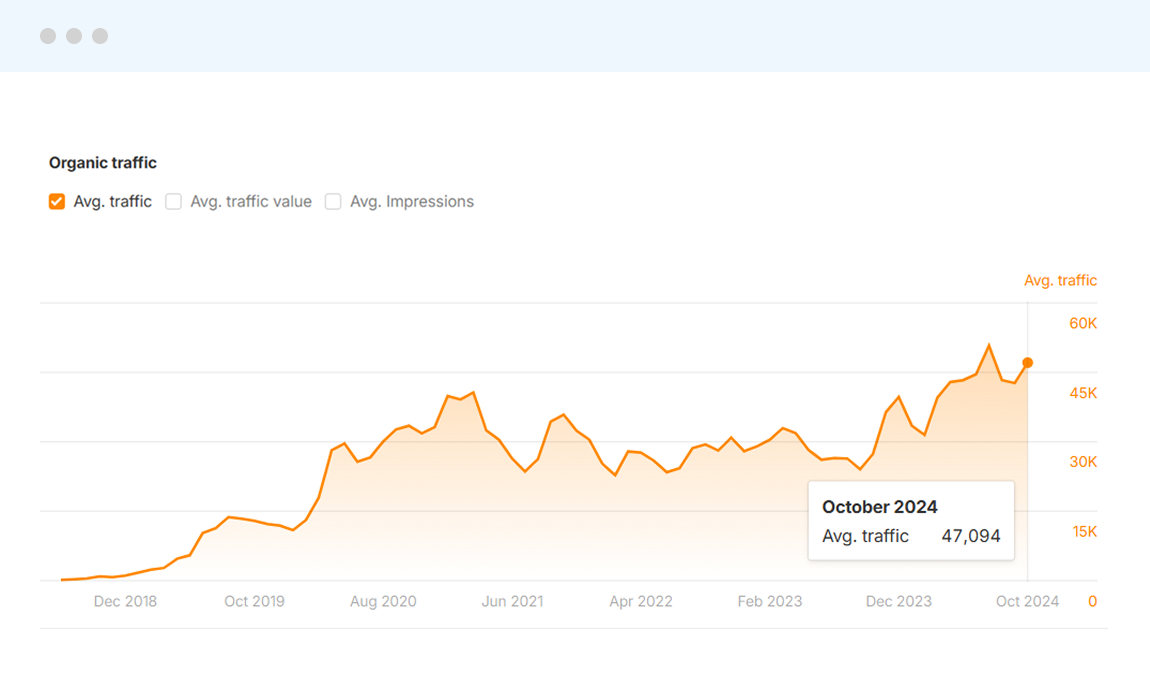
One Shopify retailer went from invisible to dominant using a $2,600 monthly budget focused on quality link building through Rhino Rank. They built their referring domain count from single digits to over 1,000 RDs, targeting competitive retail keywords with surgical precision. The result? 1,900% traffic growth and consistent sales momentum.
Your Three-Tier Link Building Approach:
1. Product Review Placements (Fastest wins)
Get your products reviewed on niche blogs and comparison sites. Collaborator found that 52% of successful ecommerce brands use digital PR for backlinks—because product mentions naturally convert into contextual links pointing to your product pages.
2. Local Citations (If you have physical presence)
Even Shopify stores benefit from local SEO tactics. List your business in local directories with consistent NAP (Name, Address, Phone) information. These citations typically show ranking improvements within 2-4 weeks, according to Cloud Pixel Solutions.
3. Content-Based Link Magnets (Long-term authority)
Create genuinely useful guides that industry publications want to reference. One store achieved first-page rankings for long-tail keywords without any link-building budget—purely through authoritative content that earned natural backlinks.
For teams serious about automation, Seo-Writer handles the content side by generating SEO-optimized articles daily, freeing you to focus on outreach and relationship-building where human expertise still wins. The platform has published over 10,000 articles, creating consistent link-worthy assets.
Reality check: Building from 5 referring domains to 200+ takes 6-12 months of consistent effort. But Vazoola's research confirms that link building directly impacts which Shopify stores capture ready-to-buy traffic during peak seasons—and which ones stay buried on page three.
Sources cited:
- Rhino Rank Ecommerce Case Study
- WebMeridian Shopify SEO Success
- Collaborator Link Building Research
- Shopify Local SEO Guide
- Cloud Pixel Local SEO Timeline
- Vazoola Ecommerce SEO Strategies
Scaling Content Production: How Seo-Writer Automates SEO for Shopify Teams
Most Shopify teams know they need more content—but the math doesn't add up. If it takes your team 6 hours to research keywords, 4 hours to write an article, and another 2 hours to optimize and publish, you're looking at maybe two posts per week. Meanwhile, competitors publishing 5-10 articles per week are eating your organic traffic.
Seo-Writer solves this bottleneck with a three-step automated system that handles everything from competitor analysis to daily publishing—no manual prompts required. The platform has already published over 10,000 articles for e-commerce stores, with teams reporting 113% increases in blog production without sacrificing quality.
Here's how it works: First, the AI analyzes your competitors' content gaps, identifies high-traffic keywords with low competition, and maps market trends specific to your niche. Second, it builds a strategic content calendar that clusters related topics—each day targeting a specific keyword phrase with the highest conversion potential for your products. Third, it generates and auto-publishes SEO-optimized articles directly to your Shopify blog while you focus on running your store.
The difference between this and cobbling together separate tools? Most Shopify stores use 5-7 disconnected platforms for keyword research, writing, optimization, and publishing. Seo-Writer consolidates the entire workflow into one system that runs on autopilot—competitor research, keyword targeting, content generation, and Shopify integration all happen automatically.
One e-commerce platform using AI content automation saw a 7% rise in overall site traffic alongside their tripled output, proving that automation doesn't mean generic content. The platform creates articles targeting specific informational queries your customers actually search for, then naturally guides them toward your product pages.
Implementation Roadmap: Your 90-Day Shopify SEO Action Plan
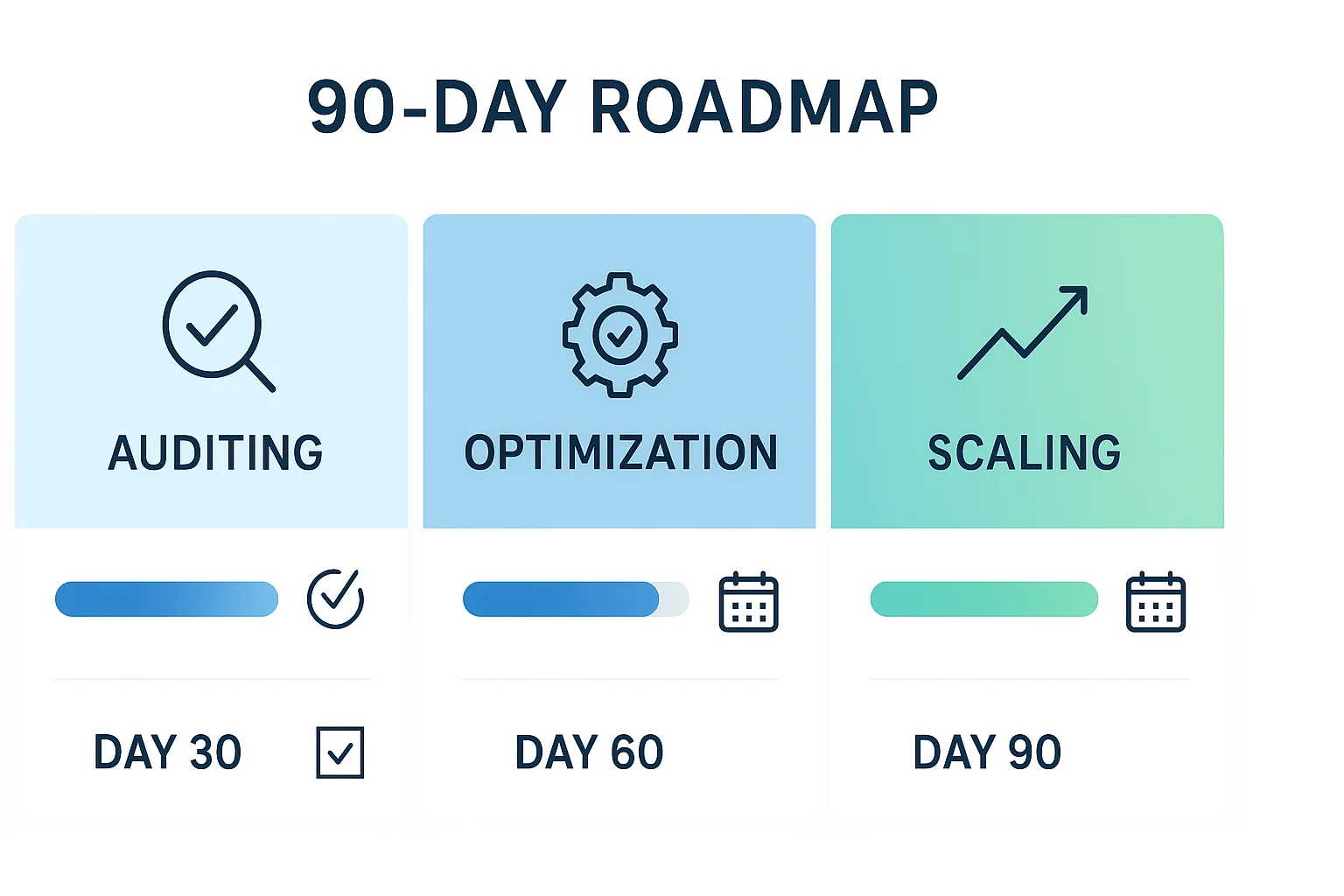
Here's what most Shopify guides won't tell you: the stores that hit 350% growth in 90 days didn't start with content—they started by fixing what was already broken. According to UM Marketing's strategic roadmap, "the best SEO isn't 'more content'—it's making sure the store you already built is actually readable."
Days 1-30: Foundation & Quick Wins
Your first month focuses on technical cleanup and immediate visibility gains. Start with Google Search Console and a full audit using Screaming Frog or SEMrush—benchmark your current traffic, identify broken links, and fix redirect chains. Week one priorities: update meta titles to under 60 characters with your primary keywords, fix 404 errors, and create an XML sitemap.
By week two, tackle Shopify's infamous duplicate content issues with canonical tags and optimize your site structure with internal linking. Week three brings Core Web Vitals improvements—compress images, implement lazy loading, and ensure mobile responsiveness (remember: 75% of Shopify traffic is mobile).
The quick win that teams overlook? Claim and optimize your Google Business Profile and add FAQ schema to your top five landing pages. One fashion store saw their first featured snippets within 15 days using this exact approach.
Days 31-60: Content Strategy & Authority Building
Month two shifts to strategic content creation. Use Seo-Writer to automate your content calendar—their AI analyzes competitors, identifies keyword gaps, and generates SEO-optimized blog posts that target long-tail searches your competitors miss. This is when WebMeridian's team achieved first-page rankings for their men's T-shirt store without any link-building budget.
Build 3-5 quality backlinks weekly through guest posts and HARO responses. Create one pillar content page per week with supporting cluster content—think "Complete Guide to [Your Product Category]" that links to specific product comparisons and how-to articles. Internal linking becomes critical: every new blog post should connect to at least three existing pages.
Common pitfall? Publishing generic content. Teams at brands like Stripe use specific use cases, customer data, and first-hand examples—not hypothetical scenarios.
Days 61-90: Scale & Optimize
The final month is about amplifying what's working. Review Google Search Console data to identify pages ranking positions 11-20—these are your low-hanging fruit for optimization. Refresh top performers with updated statistics, add comparison tables, and strengthen CTAs.
Push winning content through email campaigns and social channels. One merchant using this cross-channel approach saw their SEO data inform Google Ads targeting, creating a feedback loop that reduced acquisition costs by 40%. Build another 5+ backlinks weekly, focusing on niche-relevant roundups and resource pages.
Technical excellence separates scaling stores from stagnant ones: implement advanced schema (Product, FAQ, HowTo), optimize for Google's SGE with entity-based content, and conduct A/B tests on your highest-traffic pages. Results typically appear within 30-60 days for technical fixes, according to Shopify Plus optimization experts.
The teams that hit $481K in 90 days? They treated SEO as a system, not a checklist—fixing foundations before scaling, capturing demand before creating it.
7 Costly SEO Mistakes That Kill Shopify Rankings (And How to Fix Them)
Even experienced Shopify merchants make SEO mistakes that tank their visibility. Here are the ranking killers we see most often—and what actually works to fix them.
Leaving Password Protection Enabled After Launch
Turning on password protection tells Google you're no longer active and they shouldn't share your information in search results. One store lost 100% of their traffic overnight because of this. Check Settings > General and ensure "Password protection" is disabled before launch.
Duplicate Content Chaos
Product variants create URL nightmares. A client's site had flat traffic because duplicate pages competed against each other with confusing canonical tags. The fix: implement 301 redirects and canonical tags to tell Google which version matters. If your variants have search volume, break them into individual product pages with unique content.
Ignoring Core Web Vitals
Page speed directly impacts rankings. Google recommends loading in under two seconds, but Shopify's unique architecture limits what you control. The #1 killer? App bloat. A beauty brand saw massive improvements simply by cleaning up Google Tag Manager and leveraging Shopify APIs. Audit your apps monthly—each one adds loading time.

Missing or Generic Alt Tags
Failing to add descriptive alt tags is one of the subtler mistakes that compounds over time. Instead of "product-1.jpg," use "organic-lavender-essential-oil-bottle." Shopify automatically includes images in your XML sitemap, but only if you've optimized them first.
Poor Mobile Experience
93% of Shopify stores have fast mobile performance—don't be in the other 7%. Your mobile site determines your rankings now. Implement AMP with apps like Fire AMP or The AMP App to eliminate code bloat. A Shopify SEO specialist can audit mobile optimization issues before they crater your conversions.
For teams managing multiple content initiatives, Seo-Writer automates SEO-optimized article creation on autopilot, freeing you to focus on technical fixes. It analyzes competitors, finds high-traffic keywords, and publishes daily—while you handle the Shopify-specific issues that require manual attention.
Sources: Shopify Community Case Study, Shopify Duplicate Content Guide, Core Web Vitals Shopify Guide, Base2Brand SEO Mistakes
Turn These 11 Practices Into Measurable Growth
Here's what separates Shopify stores that stagnate from those hitting 350% growth: systematic implementation beats sporadic effort every time. You've seen the case studies—1,900% traffic increases, 40-75% organic lifts, rankings jumping from position 27 to the Top 3. These weren't lucky breaks. They were deliberate strategies executed consistently.
Start with your biggest bottleneck. If technical issues are bleeding traffic, fix your URL canonicals and Core Web Vitals first—you'll see improvements within 2-4 weeks. If content's your weakness, Seo-Writer handles the heavy lifting by analyzing competitors, identifying keyword gaps, and auto-publishing SEO-optimized articles daily while you focus on running your store. Over 10,000 articles published prove this approach scales.
For small teams (1-2 people): Focus on technical foundation and automate content production. For mid-size operations (3-5 people): Add strategic link building to your automated content workflow. For larger teams: Layer in advanced schema, international expansion, and systematic A/B testing.
| Team Size | Priority Focus | Timeline to Results | |-----------|---------------|---------------------| | 1-2 people | Technical fixes + automated content | 30-60 days | | 3-5 people | Above + link building campaigns | 60-90 days | | 6+ people | Full implementation + advanced optimization | 90+ days |
Pick one practice from this guide. Implement it this week. Measure the impact. Then add the next one. The stores dominating your niche didn't do everything at once—they just never stopped moving forward.