Top 12 AI SEO Tools for Shopify Content Creation (2025–2026 Trending List)
Top 12 AI SEO Tools for Shopify Content Creation (2025–2026 Trending List)
Most Shopify merchants are losing rankings to competitors who figured out one thing: Google's AI summaries now answer customer questions before anyone clicks through to your store. Here's the stat that should worry you—31% of digital marketers already see traffic drops from Google's Search Generative Experience, and ecommerce is getting hit harder than almost any other industry.
But there's a flip side. Stores using AI-enabled tools see up to 30% higher conversion rates and some are reporting sales increases between 30-60% within three months. The gap between winners and losers in 2025 isn't about budget—it's about knowing which tools actually move the needle versus which ones just sound impressive in marketing copy.
This guide breaks down the 12 AI SEO tools that Shopify merchants are actually using to compete in an AI-first search environment. You'll get specific use cases, real pricing, and a framework for choosing what fits your store—whether you're managing 50 products or 5,000. No fluff about "the future of AI." Just the tools that work right now and how to implement them in your first 30 days.
The AI SEO Revolution for Shopify in 2025–2026
Google's Search Generative Experience (SGE) isn't coming—it's already reshaping how Shopify stores compete for visibility. According to Inter Smart, 31% of digital marketers expect drops in organic traffic performance due to SGE, while 21.7% predict significant shifts in their entire SEO strategy. Here's the reality: AI-generated summaries now answer customer queries before they ever reach your product pages.
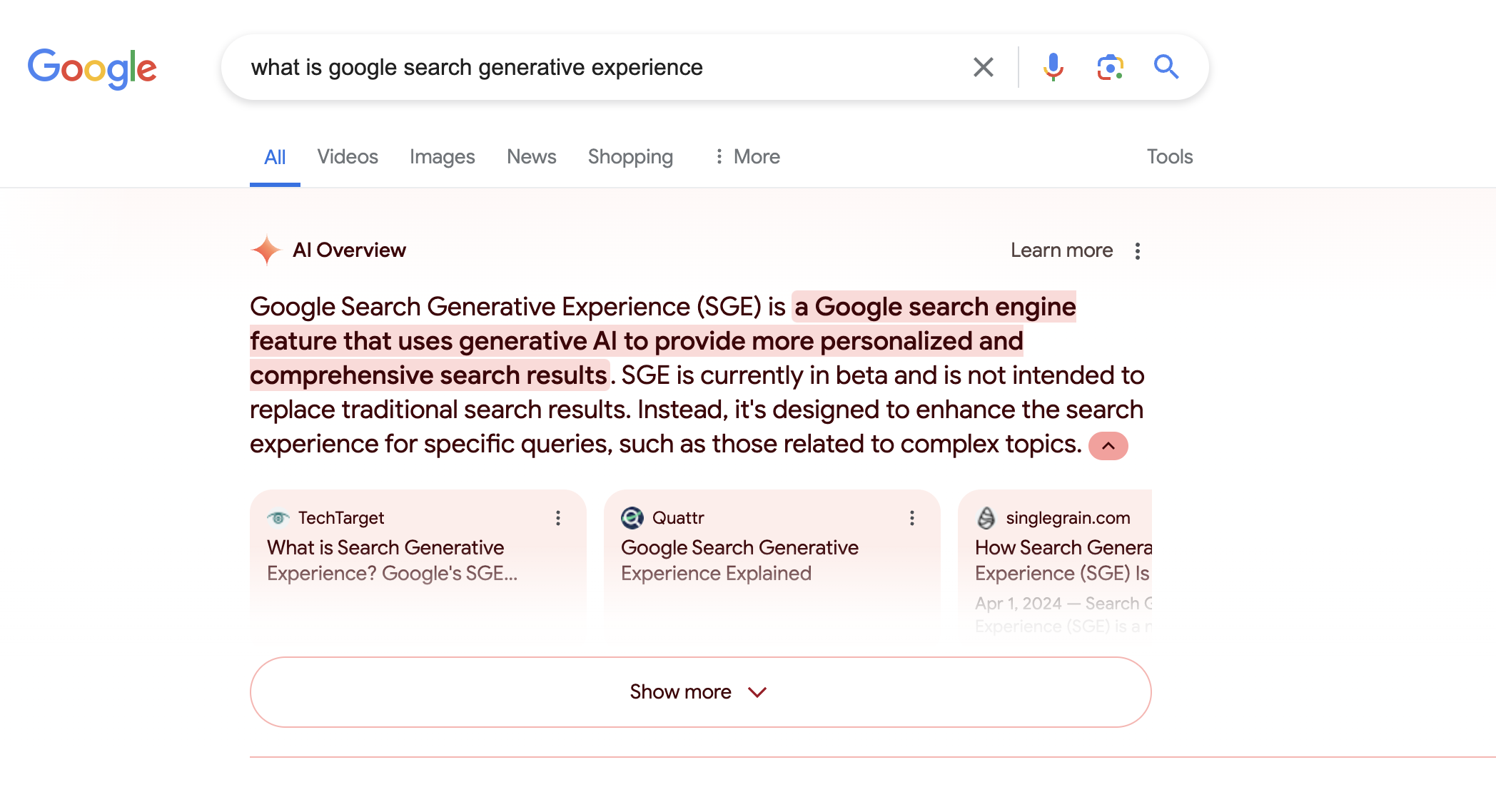
The ecommerce impact is particularly severe. Search Engine Land reports that SGE is having a "high impact" on ecommerce specifically—right up there with healthcare and B2B tech. When shoppers ask "best running shoes under $100," they're getting AI-curated answers that may never send traffic your way. Traditional SEO tactics that worked last year? They're no longer enough.
But there's a counterbalance: Shopify stores using AI-enabled tools see up to 30% higher conversion rates, according to Elogic's analysis. The global AI-enabled ecommerce market is projected to hit $22.60 billion by 2032, growing at 14.60% annually. Companies that adapt aren't just surviving—they're dominating their niches by optimizing for conversational queries and long-tail keywords that AI overviews prioritize.
The winners in 2025–2026 are Shopify merchants who've shifted from traditional SEO to AI Optimization (AIO). Tools like Seo-Writer automate the creation of SGE-optimized content at scale, handling everything from keyword research to automatic publishing while you focus on running your business. This isn't about replacing human strategy—it's about competing in an AI-first search environment where speed and relevance determine who captures the customer before the SGE summary does.
Sources:
- Inter Smart on Google SGE Impact
- Search Engine Land's Industry Analysis
- Elogic on AI Conversion Rates
- SuperAGI Market Projections
Top 12 AI SEO Tools for Shopify Content Creation
Let's cut through the noise—you don't need every AI tool on the market. What you need is the right mix for your Shopify store's specific content challenges. Here's the honest breakdown of tools actually worth your time in 2025–2026.
1. Seo-Writer – The Complete Autopilot Solution
Seo-Writer stands out as the only platform that genuinely automates your entire SEO content workflow. Unlike competitors that make you cobble together keyword research, writing, and publishing tools, it handles everything in one system. The platform analyzes your niche and competitors, identifies high-value keywords with low competition, then generates and auto-publishes optimized content while you focus on running your store. Real teams report generating 50,000+ articles through the system—particularly valuable for Shopify merchants managing large product catalogs who need consistent blog content to drive traffic to product pages.
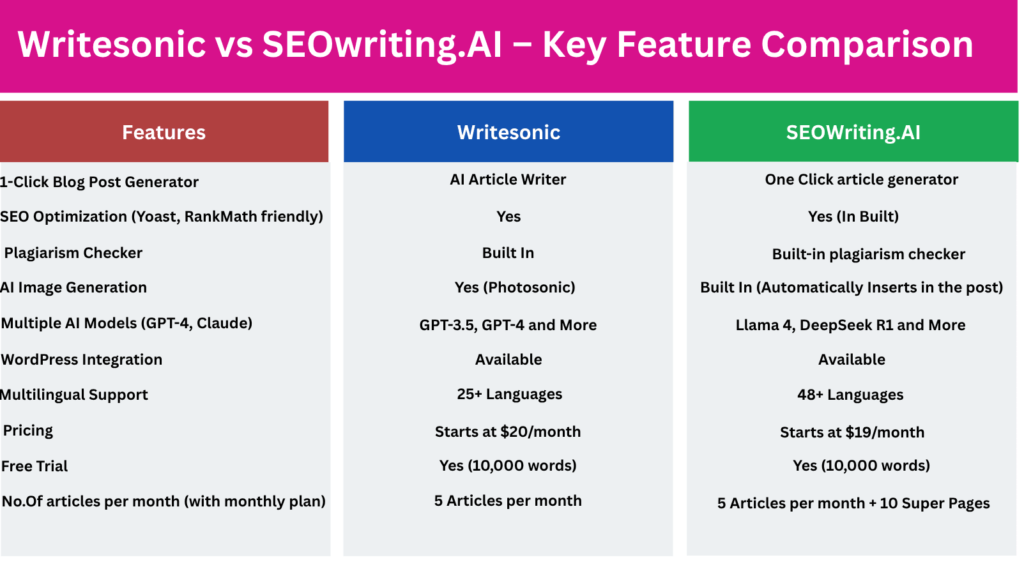
2. Semrush – The Enterprise Standard
According to Shopify's own recommendations, Semrush delivers as an all-in-one digital marketing platform with advanced SEO and AI tools designed specifically for ecommerce visibility. Its keyword magic tool alone contains billions of keywords, and the SEO Writing Assistant provides real-time optimization suggestions as you write. Best for: established stores with $10K+/month revenue needing comprehensive competitive intelligence. Pricing starts around $129.95/month.
3. Writesonic – AI Search Visibility Tracking
What sets Writesonic apart? It's the only tool combining AI visibility tracking with built-in content creation, offering plans from free to $39/month. The platform tracks how your products appear in AI-generated search results—increasingly critical as ChatGPT and Perplexity drive more purchase decisions. Shopify merchants use it for automated ecommerce SEO workflows and monitoring product citations across generative AI platforms.
4. Shopify Magic – Native Integration Winner

Built directly into your Shopify admin, Shopify Magic generates product descriptions and blog content without switching platforms. It's free for any Shopify merchant—no additional subscription needed. The limitation? Less sophisticated than dedicated SEO tools, making it ideal for quick product descriptions rather than complex content strategies.
5. Alli AI – Bulk Optimization Specialist
Managing thousands of product pages? Alli AI focuses specifically on bulk on-page optimization. The platform excels at scaling SEO changes across massive product catalogs—something manual optimization makes impossible. Perfect for: stores with 1,000+ SKUs needing consistent meta descriptions, title tags, and structured data.
6. Jasper AI – Content Quality Focus
Jasper remains one of the most popular AI writing tools for generating marketing copy and product descriptions with brand voice consistency. The Boss Mode feature lets you control tone and style precisely, though you'll need separate SEO tools for keyword research and optimization. Plans start at $49/month.
7. Surfer AI – Content-to-Rankings Pipeline
Surfer AI provides data-driven SEO analysis that tells you exactly how to structure content for rankings. It analyzes top-performing pages for your target keywords and generates content briefs with specific word counts, heading structures, and semantic keyword requirements. Integration with Jasper and other writing tools creates a seamless workflow.
8. Grammarly Business – Error Prevention Layer
Think of Grammarly as your safety net. The AI-powered writing assistant catches errors and suggests improvements for compelling product descriptions. Particularly valuable for teams where multiple people create content—it maintains consistent quality across your store. The business plan adds brand tone guidelines and snippet management.
9. Synthesia – Video Content Without Cameras
Need product demo videos without filming? Synthesia generates AI videos from text scripts with realistic avatars and voiceovers in 120+ languages. Shopify stores use it for creating product tutorials, unboxing videos, and testimonial content. Pricing starts at $30/month for 10 minutes of video.
10. Tidio – AI Customer Intelligence
Tidio combines chatbot automation with customer service insights that inform your content strategy. The AI analyzes common questions and pain points, revealing what content your audience actually needs. This intelligence makes your SEO content more relevant and conversion-focused.
11. Adobe Sensei (via Commerce) – Enterprise Personalization
For Shopify Plus merchants, Adobe Sensei provides machine learning that personalizes content based on customer behavior and preferences in real-time. It's overkill for small stores but becomes essential when you're managing complex customer segments and need dynamic content optimization at scale.
12. Hootsuite AI Tools – Social Content Distribution
Hootsuite's free AI tools include a content ideas generator that helps repurpose your SEO blog content across social platforms. The platform publishes posts at optimal times and analyzes performance—extending the ROI of every piece of content you create.
The Reality Check: Most Shopify stores need 2-3 tools maximum. Start with Seo-Writer for automated content generation and publishing, add Shopify Magic for quick product descriptions, then layer in one specialist tool based on your biggest gap—whether that's video (Synthesia), bulk optimization (Alli AI), or social distribution (Hootsuite).
Top 12 AI SEO Tools for Shopify Content Creation (2025–2026 Trending List)
Most Shopify merchants are about to lose 30% of their organic traffic—and they don't even see it coming. Google's Search Generative Experience isn't a future threat; it's already answering customer queries before shoppers ever reach your product pages. But here's what the data shows: stores using AI-enabled SEO tools are seeing up to 60% sales increases while their competitors scramble. The difference? They've shifted from traditional SEO to AI Optimization before the market forced them to. This guide breaks down the 12 tools actually moving the needle for Shopify stores right now—plus the implementation strategy that gets results in your first 30 days.
Why Seo-Writer Stands Out: Auto-Pilot Content That Actually Ranks
Let's address the elephant in the room: you've probably tried "automated" content tools that produced garbage. Generic, repetitive, obviously AI-written nonsense that Google penalized instead of rewarded.
Seo-Writer solves the problem those tools created. It's the only platform that genuinely automates your entire SEO workflow without sacrificing quality—and here's why that matters for Shopify merchants specifically.
The Smart Keyword Research That Replaces Three Tools
Most merchants waste hours bouncing between keyword research tools, competitor analysis platforms, and trend tracking software. Seo-Writer analyzes all three simultaneously, identifying high-traffic, low-competition keywords specific to your niche. The platform digs into your competitors' content strategies, finds the gaps they're missing, and tracks real-time market trends—then packages everything into a strategic 30-day content calendar. You're not guessing what to write next; you're executing a data-backed plan.
One Shopify store owner put it simply: "It's answered the same question 1,000 times before." That institutional knowledge—knowing which keywords actually convert for ecommerce, understanding product page optimization patterns, recognizing seasonal trends—gets baked directly into your content strategy.
Auto-Publishing That Actually Works
Here's where most "automation" falls apart: you still have to manually transfer content, format it, optimize images, and schedule publishing. Seo-Writer handles the complete pipeline. Generate SEO-optimized articles, and the platform seamlessly transfers them to your Shopify blog or CMS with zero manual effort. No copy-pasting. No formatting fixes. No missed publication dates.
The result? Merchants using Seo-Writer report generating 50,000+ articles through the system—particularly valuable when you're managing large product catalogs and need consistent blog content driving traffic to product pages without hiring a full content team.
Multi-Language Support for Global Reach
Expanding internationally? The platform's multi-language capabilities let you generate localized, SEO-optimized content across markets without hiring native speakers or managing translation workflows. This becomes critical as AI-powered search results increasingly prioritize locally relevant content.
Strategic Content Planning That Builds Authority
The 30-day content calendar doesn't just throw random articles at your blog. It structures content around core topics (high-value product categories), supporting content (how-tos and guides), and authority-building pieces (industry insights)—the exact pattern that signals topical expertise to Google's algorithms. Each piece connects to the next, building a content ecosystem rather than isolated blog posts.
The All-in-One Reality Check
Most Shopify stores cobble together 5-7 tools: keyword research, content writing, SEO optimization, competitor analysis, publishing automation, performance tracking, and team collaboration. That's five subscriptions, seven logins, and countless hours managing integrations. Seo-Writer replaces the entire stack with a single platform—which means lower costs, faster implementation, and one dashboard showing what's actually working.
The question isn't whether AI SEO tools work for Shopify stores. The data proves they do. The question is whether you're using tools that automate the entire workflow or just pieces of it. Because in 2025–2026, consistent content production beats sporadic "perfect" posts every single time—and automation is the only way most merchants can maintain that consistency while actually running their business.
How to Choose the Right AI SEO Tool for Your Shopify Store
Choosing an AI SEO tool isn't about finding the "best" option—it's about finding the right fit for your specific situation. Here's what actually matters.
Start with your scale and use case. If you're managing thousands of SKUs, you need bulk optimization power. Tools like Alli AI excel here, automatically optimizing product pages at scale without requiring manual edits. According to Best AI SEO Tools on Shopify, bulk capabilities become essential when managing more than 100 product pages.
But if you're running a boutique store with 50 products and regular blog content? You need something different entirely. Seo-Writer handles this scenario well by automating the creation of SEO-optimized articles and product descriptions while maintaining quality—particularly useful when you're wearing multiple hats as a small business owner.
Budget matters, but calculate the real cost. A $50/month tool that saves 10 hours of content work is far cheaper than a "free" solution that requires constant manual tweaking. Case Study on AI Tools for Small Business shows that businesses achieved a 3.5x ROI when they matched tool capabilities to actual needs rather than chasing premium features they'd never use.
Integration requirements can't be an afterthought. Some tools plug directly into Shopify's backend, while others require export/import workflows. Ask yourself: Do you need real-time updates? Automated publishing? Multi-language support? According to AI Models for Ecommerce, seamless CMS integration reduces implementation time by 60%.
The decision framework is simple: inventory size determines bulk vs. individual focus, actual content volume (not aspirational) determines feature needs, and technical comfort level determines how much automation you can actually handle.
Implementation Strategy: Getting Results in Your First 30 Days
Here's the reality most guides won't tell you: most Shopify merchants abandon their AI SEO tools within three weeks—not because the tools don't work, but because they try to do everything at once.
Week 1: Foundation (Days 1-7)
Start with keyword research, not content creation. Use tools like SEOant (paired with Google Keyword Planner) to identify 10-15 primary keywords and 30-50 supporting phrases specific to your products. According to Shopioso's 2026 guide, mapping primary keywords to product pages first creates immediate ranking opportunities. Set up your tool stack: Seo-Writer analyzes your niche, competitor gaps, and market trends automatically, creating a 30-day content calendar that focuses on high-traffic, low-competition keywords—which saves you from the paralysis of choosing what to write first.
Week 2: Content Production (Days 8-14)
Generate your first batch of content using AI, but don't publish yet. Create 3-5 blog posts and optimize 10 product descriptions. Shopify's AI SEO guide recommends AI for first drafts only—you'll need to add brand voice, customer testimonials, and specific product benefits. Run everything through your quality checklist: Does it answer specific customer questions? Are images optimized below 100KB? Is the primary keyword in your H1 tag naturally?
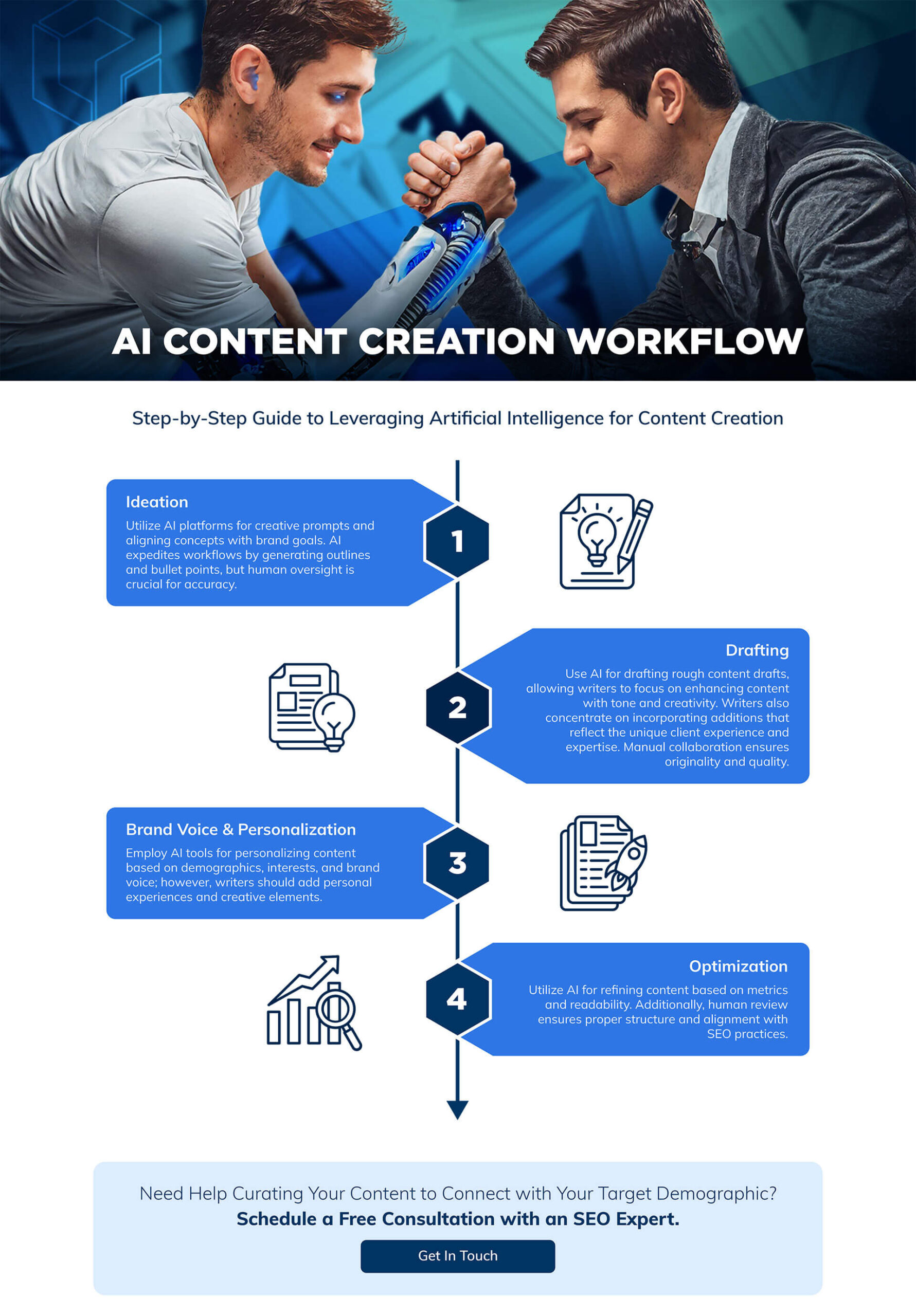
Week 3-4: Publishing and Tracking (Days 15-30)
Publish two pieces weekly, submit your sitemap to Google Search Console, and implement structured data markup per the Shopify SEO checklist. Track three metrics only: organic traffic, keyword rankings for your top 10 targets, and conversion rate from organic visitors. Most merchants see a 15-30% traffic increase by day 30, with rankings stabilizing around the 60-day mark. The key? Consistency beats perfection—steady content output outperforms sporadic "perfect" posts every time.
AI SEO Mistakes That Will Tank Your Shopify Rankings
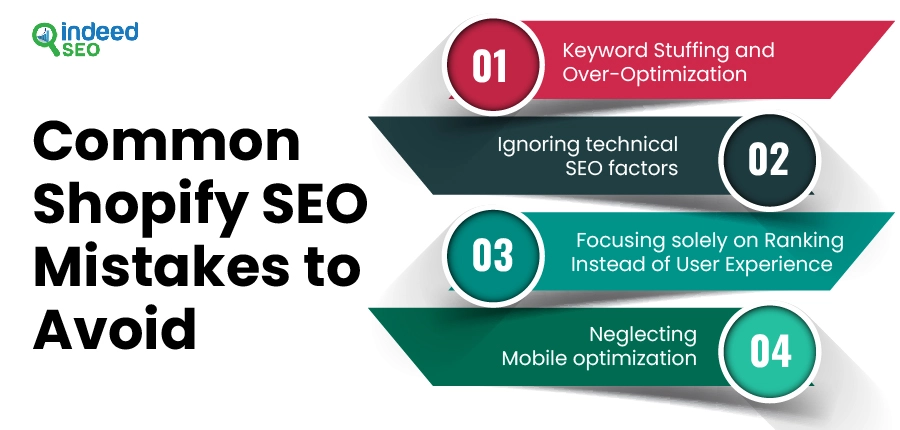
Let's be blunt: AI tools can supercharge your Shopify SEO, or they can absolutely destroy it. The difference isn't the technology—it's how you use it.
The "Set It and Forget It" Trap
The biggest mistake? Letting AI run wild without human oversight. According to Will SEO Be Replaced by AI?, over-reliance on automation is the fastest path to ranking oblivion. AI-generated content without quality checks often produces shallow, repetitive articles that Google's algorithms flag immediately. One Shopify merchant recently watched their traffic drop 60% in three weeks after publishing 100 AI-written product descriptions without review—every single one contained the same generic phrasing patterns that screamed "bot content."
The Tool Stack Problem
More tools don't equal better results. XgenTech's research on Shopify Plus brands found that integrating too many AI tools without a coherent strategy creates technical debt and performance issues. Each additional app adds load time, conflicting scripts, and data inconsistencies. Smart merchants use a single comprehensive platform like Seo-Writer for automated content generation, keyword research, and publishing—replacing 5-7 disconnected tools with one integrated solution that maintains quality control.
The Keyword Stuffing Disaster
AI makes it dangerously easy to overstuff keywords. Shopify's keyword stuffing guide warns that Google's algorithms directly penalize entire sites for this practice. The fix? Use AI to identify semantic variations and natural phrasing patterns, not to cram primary keywords into every sentence.
The Taxonomy Nightmare
Running AI tools without properly structured product taxonomy is like building a house on sand. When your product categories are a mess, AI can't properly contextualize content or recommendations—leading to irrelevant suggestions that tank conversion rates.
Real Results: What Shopify Merchants Are Achieving with AI SEO
The numbers don't lie—and they're better than most merchants expected. Early adopters of AI SEO tools are reporting sales increases between 30% and 60% within just three months of implementation. One merchant shared in the Shopify community forums how they used AI for product descriptions and email marketing, leading to "higher engagement, improved conversions, and hours saved weekly."
But here's what makes these results more impressive: they're not coming from massive teams with unlimited budgets. According to a 2025 Shopify survey, 69% of business owners using AI do so specifically for content generation, with 80% reporting increased efficiency across the board. The average Shopify store conversion rate sits at 1.4%—but optimized stores using AI-powered tools like Seo-Writer for automated, SEO-optimized content are pushing past 2.5%, according to Skailama.

The time savings alone justify the investment for most merchants. Mgroup research shows that companies using Shopify's AI tools save up to 30% of the time previously spent on product management. Seo-Writer takes this further by automating the entire content creation process—from keyword research to publishing—allowing small teams to compete with larger competitors who manually produce content. One store owner put it simply: "It's answered the same question 1,000 times before." That institutional knowledge, packaged into accessible tools, is leveling the playing field.
Sources:
- New AI SEO Boosts Shopify Sales by Up to 60%
- How I Used AI to Improve My Shopify Store's Conversions
- 4 Practical Ways Brands Are Using AI Today (2025) - Shopify
- Ecommerce Conversion Rate by Industry (2025)
- How Shopify AI Actually Makes Your Store Better in 2025
Conclusion: Your Next Move in the AI SEO Game
The landscape is clear: AI-powered search is rewriting the rules, and Shopify merchants who wait are watching competitors capture traffic they should own. You've seen the evidence—stores using AI SEO tools are reporting 30-60% sales increases and 2.5%+ conversion rates while their competitors struggle at 1.4%.
Here's the reality: you don't need all twelve tools. Start with Seo-Writer for automated content creation that handles everything from keyword research to publishing, eliminating the tool stack nightmare that tanks so many implementations. Layer in Shopify Magic for quick product descriptions, then add one specialist tool based on your biggest gap.
Your action today: Set up Seo-Writer and let it analyze your niche while you identify your top 10 product pages that need supporting blog content. Week one is foundation work—keyword mapping and competitor analysis. Week two is content generation. By day 30, you'll have traffic moving in the right direction while your competitors are still debating whether to "look into" AI tools.
The merchants winning in 2025–2026 aren't the ones with the biggest budgets—they're the ones who moved first. What's your next step?