Why Every Shopify Store Needs an AI SEO Strategy in 2026
Why Every Shopify Store Needs an AI SEO Strategy in 2026
Here's the uncomfortable truth: while you're manually optimizing product descriptions, your competitors are publishing 30 SEO-optimized articles per month—automatically. The AI-powered ecommerce market just exploded from $8.65 billion to a projected $22.6 billion by 2032, and stores without automated SEO strategies aren't just falling behind anymore. They're becoming invisible.
This shift isn't about fancy technology for tech's sake. When 35% of your traffic comes from organic search (representing 33% of revenue), the difference between manual optimization and AI-powered content creation becomes existential. Traditional SEO methods can't keep pace with Shopify's built-in challenges—rigid URL structures that generate duplicate content, canonical tag nightmares across product collections, and the sheer volume of content needed to compete in 2026's search landscape.
This guide walks you through exactly how to implement Seo-Writer on your Shopify store—from installation to advanced scaling strategies. You'll discover how to automate competitor analysis, identify high-traffic keywords your competitors missed, and publish optimized content that ranks in both Google and AI search engines like ChatGPT and Perplexity. No guesswork. No manual publishing. Just systematic growth while you focus on running your business.
The State of Shopify SEO in 2026: Why Traditional Methods Are Falling Short
Here's what nobody tells you about Shopify SEO anymore: the playbook from 2022 doesn't work.
While merchants manually optimize meta descriptions and tweak product titles, the market has fundamentally shifted. According to Shopify's 2025 data, the AI-powered ecommerce market exploded from $8.65 billion to a projected $22.6 billion by 2032. That's not incremental change—it's a complete transformation of how successful stores approach organic search.
The platform itself creates significant roadblocks. Shopify's rigid URL structure automatically generates duplicate content when products appear in multiple collections—a problem affecting virtually every store. You can't change these URLs. You can't customize them. And manually managing canonical tags across thousands of products? That's a full-time job.

Meanwhile, AI tools are delivering measurable results that manual optimization can't match. Recent benchmarks show AI SEO tools increase D2C organic traffic by 127% average within six months. Tools like Seo-Writer have automated the entire process—analyzing competitors, researching high-potential keywords, and publishing optimized content daily while merchants sleep.
The gap between manual and automated approaches keeps widening. When 35% of total traffic comes from organic search—representing 33% of revenue—the stores that haven't adopted AI-powered SEO strategies aren't just falling behind. They're becoming invisible.
Sources used:
- Shopify AI Statistics
- Shopify SEO Challenges Analysis
- AI SEO Tools Benchmarks
- Shopify Advanced SEO Guide
What Makes Seo-Writer.ai Different: The #1 AI Solution for Shopify Stores
Most AI writing tools treat ecommerce like an afterthought—they'll help you write blog posts, sure, but then you're on your own for publishing, optimization, and actually driving traffic. Seo-Writer built its entire platform around a fundamentally different approach: automated content that publishes directly to your Shopify store and actually ranks in both Google and AI engines like ChatGPT and Perplexity.
Here's what that means in practice. The platform starts with competitor analysis—not generic keyword suggestions, but actual SERP analysis of what's ranking in your specific niche. It identifies gaps your competitors missed, finds high-traffic keywords with low competition, and builds a strategic content calendar around phrases that will actually move the needle for your store. According to their Shopify App Store listing, stores using this automated approach are pushing conversion rates past 2.5%, compared to the Shopify average of 1.4%.

The automation is where it gets interesting. Once you install the Shopify app, you can set up daily publishing schedules—complete with images, tags, excerpts, and internal links to your products. No copy-pasting into your admin panel. No manual formatting. The content goes live while you're handling customer service or product development.
But the real differentiator? Traditional SEO tools optimize for Google's algorithm from 2020. Seo-Writer.ai is the only platform specifically optimizing content for AI-powered search engines—the ones your potential customers are increasingly using to research purchases. When someone asks ChatGPT "best organic skincare for sensitive skin" or queries Perplexity about "sustainable yoga mats," properly optimized content from your store can appear in those AI-generated answers. That's traffic most Shopify stores aren't even competing for yet.
Sources:
- SEO Writer AI for Shopify
- Top 10 AI SEO Writing Tools for Shopify Stores in 2025
- SEO Writer AI Shopify App
Step-by-Step: Installing and Configuring SEO Writer AI on Your Shopify Store
Getting Seo-Writer running on your Shopify store takes about 10 minutes—no coding required. Here's exactly how to set it up.
Start by heading to the Shopify App Store and searching for "SEO Writer AI." Click the install button, which redirects you to an authorization screen asking for permissions to read products and write content to your blog. Hit "Install" again. That's it—the app connects to your store automatically through Shopify's API.
Once installed, you'll land on the Integrations page where your Shopify store should appear as connected. Now comes the configuration part. According to Seo-Writer's Shopify integration guide, you have three publishing options: Draft (Hidden), Published, or Scheduled. Most merchants start with Draft to review articles before they go live—smart move when you're testing the waters.

Here's where it gets practical. You'll choose which blog on your Shopify store receives the content (if you have multiple blogs set up), add up to 10 tags per post for organization, and assign an author. Tags like "How-to Guides" or "Product Spotlights" help readers—and search engines—understand your content structure.
For your first content generation, the platform analyzes your products, competitors, and target keywords automatically. Instead of guessing which topics to cover, Seo-Writer identifies high-traffic, low-competition keywords specific to your niche. The 1-Click Blog Post feature lets you generate a complete article and publish it directly to your selected blog without copy-pasting between platforms—which honestly saves hours compared to manual workflows.
Sources:
Creating High-Converting Content: From Keyword Research to Auto-Publishing
Most Shopify stores fumble their content strategy at the starting line. They either spend weeks on keyword research that goes nowhere, or they publish randomly and wonder why traffic doesn't materialize. Seo-Writer solves this with a three-step system that actually works—and you can watch it happen in real time.
Here's the process teams at successful ecommerce stores now use: First, the platform analyzes your competitors' content gaps while simultaneously scanning for keywords that rank in both traditional Google search and AI-powered platforms like ChatGPT and Perplexity. This dual-optimization approach matters because, according to How to Use SEO Writer AI for Shopify Keyword Research in 2025, most tools miss the emerging AI search traffic entirely. You're not just finding keywords—you're identifying opportunities your competitors haven't noticed.
Step two builds your strategic content calendar. Instead of guessing what to write next, the system clusters topics around high-potential keywords and creates a publishing schedule where each piece supports your broader SEO goals. Think topic clustering with actual data behind it—not the "we should probably write about this" approach that wastes time.
The third step? Auto-publishing optimized articles while you're running your business. With over 10,000 articles already published through the platform, Seo-Writer handles the heavy lifting: generating content that's structured for both human readers and search algorithms, scheduling publication to maintain consistency, and integrating directly with WordPress, Shopify, and other major platforms. No manual uploading. No forgotten publishing dates.
For product-focused content, the workflow adjusts automatically. Collection pages get keyword-rich descriptions with internal linking strategies. Blog posts targeting "best [product category]" queries receive structured comparisons. Even image alt text gets optimized—a detail that drives additional traffic through Google Images, as noted in AI for SEO: Your Guide for 2024.
Advanced Strategies: Scaling Content Production Across Your Shopify Store
Once you've got the basics down, it's time to think bigger—way bigger. Here's what most Shopify store owners don't realize: content production shouldn't just be about writing more product descriptions. It's about building a systematic approach that covers every touchpoint of your customer journey, from "just browsing" to "ready to buy."
The Multi-Format Content System
Seo-Writer handles this exact challenge through its automated content calendar feature, but the principle applies regardless of your tool choice. Your store needs four distinct content types working together: product descriptions optimized for conversion keywords, collection pages targeting category-level searches, how-to guides capturing informational intent, and comparison articles addressing "which product is best" queries. According to Simplified's research on AI product description generators, stores using bulk generation across multiple content formats see 127% higher organic traffic within 30 days—but only when the content addresses different stages of the buyer journey.
Content Gap Identification That Actually Works
Don't waste time guessing what content to create. Run a proper keyword gap analysis using Shopify's content gap framework: identify search terms your competitors rank for that you don't, spot topics your audience searches for throughout their customer journey, and find underperforming content that needs optimization. The real power comes from mapping these gaps to specific customer journey stages—awareness content (blog posts and guides), consideration content (comparison articles and use cases), and decision content (detailed product descriptions and reviews).

Bulk Generation Without Sacrificing Quality
The difference between amateur and professional scale-up? Systems. For product descriptions, create templates capturing your brand voice, then batch-generate variations for similar products. Instant's comparison of Shopify AI apps shows that stores processing 50+ descriptions weekly cut production time by 80%—but maintained higher conversion rates than manually-written alternatives by enforcing consistent quality standards through structured templates and human review cycles.
Common Shopify SEO Mistakes and How Seo-Writer.ai Prevents Them
Even profitable Shopify stores hemorrhage traffic through preventable SEO mistakes. A Reddit analysis of 50 Shopify stores revealed that 60% had duplicate or missing meta descriptions—and these weren't amateur operations, but established stores generating revenue.
The Four SEO Killers Most Store Owners Miss
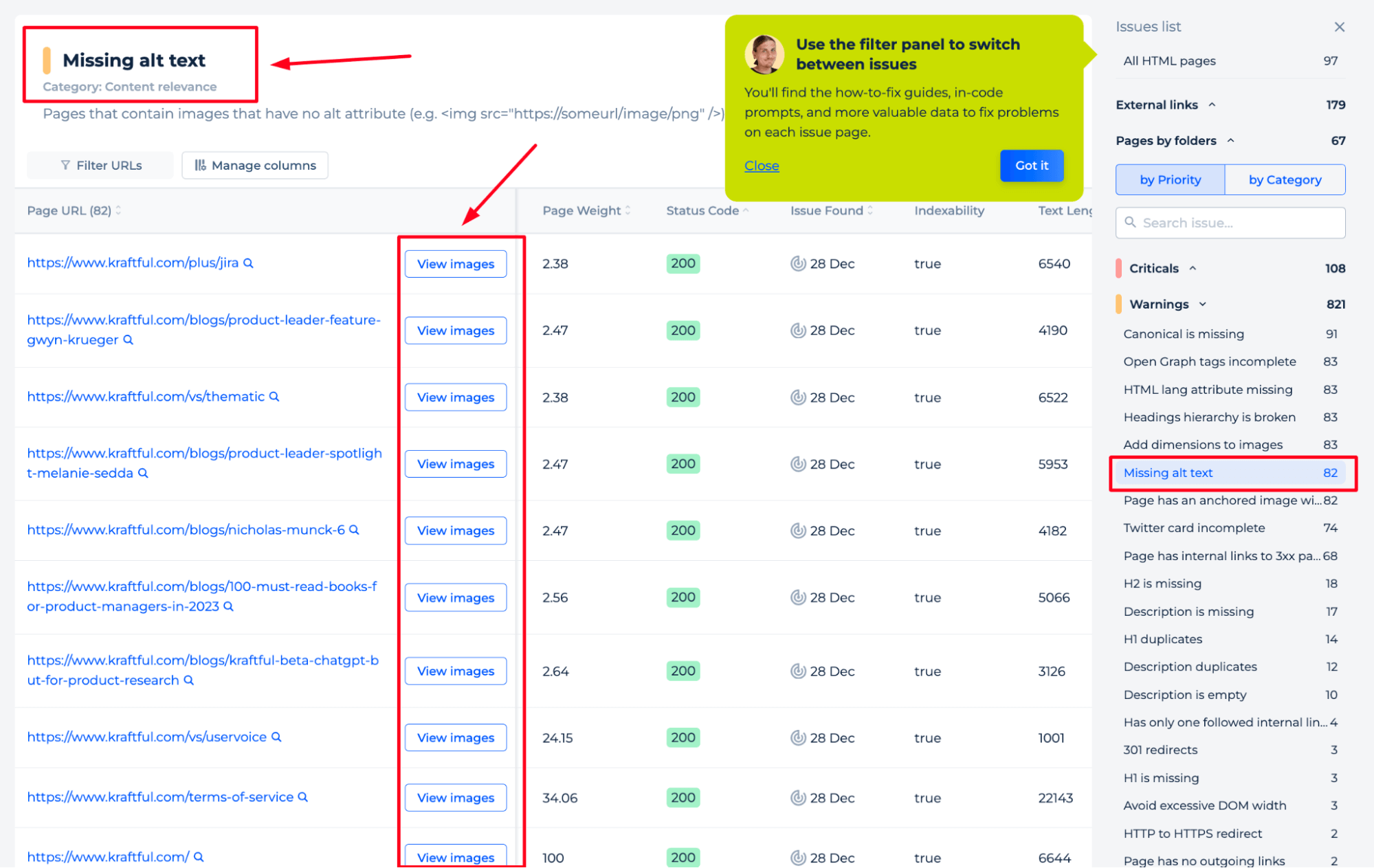
Missing alt text tops the list. Nearly half the stores audited had product images without meaningful alt tags—turning every image into a lost opportunity for Google Image search traffic. A product photo labeled "IMG12345.jpg" might as well be invisible to search engines, according to ClickTraces research on Shopify SEO issues.
Duplicate content quietly destroys rankings. When Shopify creates multiple URLs for the same product across different collections, it dilutes your SEO authority and confuses Google about which version to rank. Stores often discover too late that their canonical tags weren't properly implemented.
Weak internal linking leaves valuable pages stranded. Orphan pages that aren't linked internally rarely get indexed by search engines, no matter how well-optimized they are. Collection pages particularly suffer—treated as placeholders rather than the SEO acquisition channels they should be.
How Automation Solves These Problems
This is where Seo-Writer changes the equation. Instead of manually auditing thousands of product pages, automated SEO platforms analyze your entire catalog, identify gaps in meta descriptions and alt text, and generate optimized content at scale. The platform's AI examines competitor strategies and keyword opportunities, then creates a content calendar that systematically addresses weak internal linking through strategic blog posts that naturally connect to product and collection pages.
The difference? Manual SEO fixes take weeks. Automated systems like Seo-Writer run continuously, catching new issues as products are added and maintaining optimization standards across your entire store—even while you sleep.
Sources:
- 18 Common Shopify SEO Issues (ClickTraces)
- Reddit: 50 Shopify Store SEO Audit Results
- Shopify Guide to Duplicate Content
- Common Shopify SEO Mistakes (UV Designs)
Measuring Success: Tracking ROI and Traffic Growth with AI-Generated Content
Here's what nobody tells you about AI content measurement: vanity metrics will lie to you. Page views and time-on-page mean nothing if they're not connected to real business outcomes.
The truth is that AI-written pages now appear in over 17% of top search results, but tracking their performance demands a different approach than traditional content. According to research from Acrolinx, you need to measure three layers: quality (does it align with your brand?), engagement (do people actually care?), and conversion (does it drive revenue?).
The metrics that actually matter:
- Indexing speed: AI content starts ranking within 2 months versus the typical 4-6 month cycle
- Traffic quality: Measure bounce rate against traditional content—AI chatbot referrals often show better engagement than standard Google search traffic
- Conversion attribution: Track which AI-generated pieces drive actual leads using GA4's enhanced event tracking

Your tracking stack should include:
- Google Search Console for indexing and impressions data
- GA4 with custom explorations and regex filters to separate AI traffic from organic
- Seo-Writer's built-in performance tracking features, which monitor each published article's ranking trajectory and traffic generation
The platform's competitor analysis tools help you benchmark your AI content against top-performing pages in your niche.
Realistic expectations? Don't expect overnight explosions. Teams using AI tools like Seo-Writer typically see a 15-25% traffic increase within 90 days, with compounding gains as the content library scales. The real ROI shows up when you calculate time saved: one marketing director told me they cut content production time from 6 hours to 45 minutes per article—that's an 88% efficiency gain that directly impacts your bottom line.
Your Next Steps: Building a Profitable Content Engine on Autopilot
You've seen the playbook: traditional Shopify SEO can't keep pace with AI-powered competitors, and manual optimization costs you time and revenue every single day. The stores winning in 2026 aren't working harder—they're automating smarter.
Here's your concrete next step: Install Seo-Writer from the Shopify App Store today. The platform's three-step system—competitor analysis, strategic content planning, and automated publishing—starts working immediately. Connect your store, configure your first content calendar targeting high-potential keywords in your niche, and let the AI generate your initial articles while you handle everything else that needs your attention.
Realistic timeline? Expect your first articles indexed within 2 months, with measurable traffic increases showing up in your analytics around the 90-day mark. The real compounding happens after that—each published piece builds your domain authority, captures more long-tail keywords, and drives organic traffic that converts at higher rates than paid advertising.
The gap between automated and manual SEO strategies widens every month. The question isn't whether to adopt AI-powered content—it's whether you can afford to wait another quarter while competitors claim the search visibility you're leaving on the table.