Introduction: The AI Writing Revolution Meets the ROI Reality Check
Introduction: The AI Writing Revolution Meets the ROI Reality Check
Your Shopify store is pumping out blog posts at lightning speed thanks to AI writers. Five articles a week? Easy. Ten? Why not. But here's the uncomfortable question nobody's asking: Is any of it actually making you money?
Most store owners can't answer that. They're drowning in content but starving for proof it works. One e-commerce platform cranked out 113% more blog posts with AI and saw just a 7% traffic bump. That's the dirty secret of AI content—more doesn't always mean better, and definitely doesn't guarantee revenue.
The measurement game has changed. You're not just tracking Google rankings anymore. You need to prove ROI across traditional search, AI platforms like ChatGPT, and actual sales conversions. Without the right system, you're flying blind—either wasting budget on content that converts nothing, or abandoning AI tools just before they start paying off. This guide shows you exactly how to measure what matters, avoid the expensive mistakes, and finally prove whether your AI content investment is worth it.
Why AI-Generated Content Makes ROI Tracking More Critical (and More Complex)
Shopify stores jumping into AI content creation face a measurement paradox: you can now produce 10X more content, but proving it actually works? That's gotten messy.
According to a Shelly Palmer case study, one e-commerce platform achieved a 113% increase in blog production using AI, with a 7% rise in site traffic. Sounds impressive—until you realize the ROI calculation just got complicated. Did that 7% traffic bump justify the cost of AI tools and the human oversight needed? Traditional SEO metrics weren't built for this volume game.
Here's what's changed: 42% of businesses now use AI for long-form content creation, especially website copy. That's a massive shift in just two years. But more content doesn't automatically mean more revenue—especially when traditional SEO optimizes for rankings while AI SEO optimizes for mentions in AI-generated responses.
The real complexity? AI-written content requires what Vertu calls "broader attribution models" than traditional SEO. You're not just tracking keyword rankings anymore—you need to monitor brand awareness metrics, AI citations, and whether your content appears in ChatGPT or Perplexity results. Tools like Seo-Writer tackle this by analyzing SERP competitors and optimizing content for both traditional search engines and AI platforms, generating content that ranks across multiple channels.
The stakes are high: the AI-powered ecommerce tools market is projected to hit $16.9 billion by 2030. Shopify stores that can't prove ROI on their AI content investments will waste budget on volume without value—or worse, abandon AI tools before seeing results.
The Essential Metrics: What Actually Matters for Shopify SEO Content ROI
Most Shopify owners track the wrong numbers when measuring AI content performance. Page views look impressive until you realize they're not paying the bills.
Here's what actually moves the needle: conversion rate from AI-written pages. The typical Shopify store converts 1.4% to 1.8% of visitors, but your AI content might perform differently. Track this separately—if your AI product reviews convert at 2.3% while your manually written guides sit at 1.1%, that's actionable intel.
Revenue attribution from organic search tells you which AI content actually drives sales. According to Shopify's attribution model, you can track "sales attributed to marketing" by channel. Set up tracking for organic traffic to AI-generated pages specifically—not just total organic. Tools like Seo-Writer analyze SERP competitors and optimize content for both Google and AI platforms like ChatGPT, making it easier to track which AI-written pieces earn their keep.
Customer Lifetime Value (CLV) matters more than single transactions. The CLV formula is straightforward: (Average Order Value × Purchase Frequency) × Average Customer Lifespan. If customers who discover your store through AI content have a CLV of $847 versus $623 from paid ads, you've found your answer—even if the initial conversion rate looks similar.
The difference between these metrics and vanity metrics? Actionable metrics drive decisions. A thousand page views means nothing if conversion sits at 0.3%. But a 15% add-to-cart rate that drops to 2% at checkout? That's not a content problem—it's a checkout flow issue.

Focus on the money metrics: conversion by content type, attributed revenue, and CLV from organic visitors. Everything else is just noise.
Sources:
- Ecommerce Analytics: How To Analyze Data For Your Business
- Shopify Average Conversion Rate
- 9 Strategies To Achieve a Higher Conversion Rate
- How To Calculate Customer Lifetime Value
- Vanity Metrics vs. Actionable Metrics
- Measuring marketing performance
Calculating Your AI Content ROI: The Formula That Actually Works
Here's the straightforward math that cuts through the noise: (Revenue from Content - Total Content Costs) / Total Content Costs × 100. Simple? Yes. But the devil's in tracking what actually goes into those numbers.
Let's break down the real costs when you're running AI-generated content on Shopify. First, your AI tool subscription—Seo-Writer offers bulk article generation with automated WordPress and Shopify posting from their free tier onwards, while tools like Jasper start at $49/month for solo creators. Then add editing time. Even AI-generated content needs human oversight—figure 1-2 hours weekly at your hourly rate. Don't forget Shopify app fees for analytics tracking (typically $10-30/month) and any stock photo subscriptions you're using.

Here's a real example from a Shopify store tracked by Agents24x7: They spent £20/month on automated content generation, added £50/month for editing oversight, and invested £15/month in analytics tools—total monthly cost of £85. The result? £3,000 in additional monthly organic revenue within 30 days. Using the formula: (£3,000 - £85) / £85 × 100 = 3,430% ROI.
That's not typical—most stores see 200-400% ROI in months 3-6 as content compounds. But it illustrates why measuring attributed revenue correctly matters more than vanity metrics. Track non-brand organic traffic through Shopify Analytics under "Sessions by referrer > Organic search" and connect those sessions to actual purchase data. The stores that nail this calculation understand one truth: content ROI isn't about the AI tool's price tag—it's about velocity and conversion rates.
Sources:
- Content Marketing ROI Formula - Jasper.ai
- Shopify SEO Case Study - Agents24x7
- Tracking Non-Brand Revenue - Hoook.io
Tools and Tactics: Setting Up Your Measurement System
Here's the truth about tracking AI content ROI: you don't need expensive enterprise software to get started. The combination of free tools already available to Shopify merchants can tell you everything you need to know.
Start with GA4 and Shopify's Native Analytics
Shopify's official integration with Google Analytics 4 has made setup dramatically easier than before. You'll need to create a Google Analytics account, set up a GA4 property, and connect it through your Shopify admin—the entire process takes about 15 minutes. According to Commence Studio's comparison analysis, Shopify Analytics provides real-time sales data perfect for quick decisions, while GA4 offers deeper behavioral insights that reveal why customers are converting.
The real power comes from using both platforms together. Shopify Analytics shows you revenue per session and top-selling products instantly. GA4, on the other hand, tracks the full customer journey—which blog posts drove the most engaged sessions, how users navigate from content to checkout, and where they drop off.
Tag Your AI Content for Tracking
Want to know if Seo-Writer content performs differently than your manually written posts? Create custom dimensions in GA4. Analytics Mania's guide shows you can configure custom dimensions through Google Tag Manager to label content by source—"AI-generated," "human-written," "hybrid"—then compare conversion rates directly.
Brian Lim from iHeartRaves uses custom dimensions to track Collection Filter hits and product performance, drilling deeper into which specific content types drive revenue. Apply the same approach: tag AI articles with custom parameters like content_type, word_count, and publish_date, then segment your reports to isolate AI content performance.

How to Measure SEO Content ROI on Shopify When Using AI Writers
You just published 50 AI-generated blog posts last month. Your Shopify store's content library exploded. But here's the question keeping you up at night: did any of it actually make you money?
Most store owners can't answer that question. They're drowning in vanity metrics—page views, impressions, session duration—while their actual revenue attribution sits in a black box. This guide breaks down the exact formula, tools, and tracking systems you need to measure whether your AI content investment is paying off. You'll learn which metrics actually matter, how to calculate true ROI with real numbers, and—most importantly—how to stop wasting money on content that doesn't convert.
Why Seo-Writer Stands Out for ROI-Focused Shopify Stores
When you're serious about measuring content ROI, you need a tool built for measurability from the ground up. Seo-Writer solves the tracking problem before you even publish.
Here's what makes it different: while most AI writers just generate text and wish you luck, Seo-Writer analyzes SERP competitors before creating a single word. That means your content is optimized for both traditional Google rankings and AI engine citations in ChatGPT and Perplexity. When you're tracking ROI across multiple channels, that dual optimization matters—you're not just measuring Google traffic, you're capturing the growing percentage of searches happening through AI assistants.
The bulk publishing feature changes the ROI calculation entirely. Generate and auto-post up to 100 articles to WordPress in one click, then track performance at scale. Instead of spending hours manually publishing AI content (which kills your ROI on time costs), you're measuring results across your entire content portfolio within days. The platform's document management system lets you organize by performance metrics, so you immediately see which content types drive conversions.
Most importantly for ROI tracking: Seo-Writer provides built-in SEO optimization guidance tied to valuable keywords. You're not guessing which keywords might drive revenue—the platform shows you competitive analysis upfront. When you combine that with Shopify's analytics showing revenue per session, you can directly connect specific AI-generated content to actual sales within 4-6 months of consistent publishing.
Over 50,000 businesses already use it to measure what matters: not just content volume, but content that converts. The free trial lets you test the ROI tracking approach yourself before committing a dollar.
Common Mistakes That Tank Your AI Content ROI (and How to Avoid Them)
Publishing AI-generated content without human editing tops the list of expensive mistakes. According to HigherVisibility, overreliance on unedited AI content produces thin material lacking depth and accuracy. TechVint confirmed what many Shopify stores learned the hard way: those publishing AI text without human review are losing visibility fast.
The fix? Tools like Seo-Writer analyze SERP competitors and generate optimized drafts, but your team still needs to add brand voice, verify claims, and inject experience. One software company saw their AI content perform 3x better after implementing a mandatory 15-minute human editing pass.

Another critical error: not tracking long enough for SEO maturity. WebFX found SEO takes three to six months minimum to show results, with e-commerce sites needing 6-12 months. Yet many Shopify merchants panic and abandon AI content strategies at month two. AI Business Plans documented how one e-commerce site's organic traffic surged in months 4-6, but only after consistent content publication during the first three months.
The attribution puzzle matters too. Triple Whale revealed that AI attribution models from Google and Meta claim excessive credit for sales, leaving SEO channels looking weak in reports. Without proper segmentation between AI-generated and human-written content, you can't identify which approach drives results. Shopify recommends using Google Search Console to track organic performance separately, while XgenTech warns that deploying AI without tracking frameworks directly costs brands millions in lost revenue.
Real-World Results: What Good ROI Actually Looks Like
Let's cut through the hype. If you're expecting AI-written content to transform your Shopify store overnight, you're setting yourself up for disappointment.
According to First Page Sage's industry benchmarks, most stores won't see meaningful organic traffic increases until 4-6 months into a content campaign. That's when Google finally decides your content is worth showing to people. Highly competitive niches? You're looking at 12 months before hitting your stride.
But here's what you can realistically expect once things click: Businesses using AI in at least three core marketing functions report a 32% increase in ROI compared to traditional methods. Not bad, but the real magic happens when you combine AI efficiency with smart optimization.
The conversion rate reality check: Shopify stores average 2.5-3% CVR, while global eCommerce hovers around 1.9%. If you're hitting 4.7% or higher, you're in the top tier. AI content alone won't get you there—but tools like Seo-Writer can dramatically speed up the process by analyzing SERP competitors and optimizing for both traditional search and AI engines like ChatGPT.
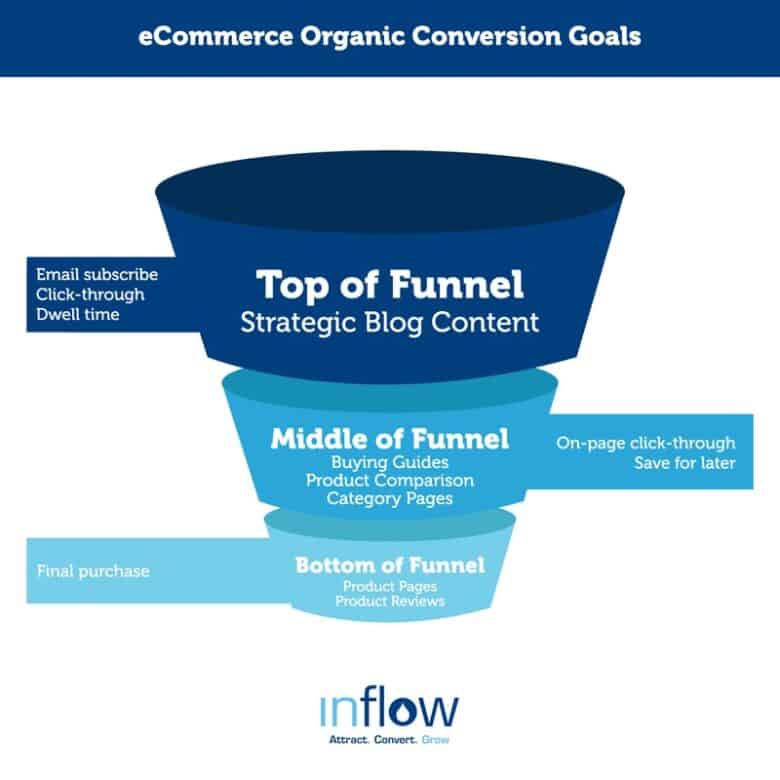
Early-stage metrics (months 1-3): Focus on indexation rates and keyword rankings climbing from position 50+ to 20+. Mature content (6-12 months): You should see consistent organic traffic growth, improving click-through rates, and—most importantly—actual conversions tied to specific content pieces. The stores winning with AI content aren't just publishing faster; they're using that speed advantage to test, iterate, and double down on what converts.
How to Measure SEO Content ROI on Shopify When Using AI Writers
Most Shopify stores are producing 10X more content with AI but have no clue if it's making them money. You're cranking out blog posts, product descriptions, and buying guides at machine speed—but when your CFO asks "What's the return on this AI subscription?", you freeze. Here's the problem: traditional SEO metrics weren't built for content created in minutes instead of days. This guide shows you exactly how to calculate real ROI from AI-generated content on Shopify, which metrics actually matter for your bottom line, and the practical tools that prove whether your AI content investment is paying off or draining your budget.
Your 90-Day Action Plan: From Setup to First Meaningful Results
Here's the reality: you're not going to see meaningful ROI from AI content in week two. But with the right measurement framework, you'll have proof of performance by month three.
Month 1: Setup and Baseline (Days 1-30)
Start by connecting GA4 to your Shopify store—the official integration takes 15 minutes. Configure custom dimensions in GA4 to tag content as "AI-generated" so you can track performance separately. Document your current baseline: organic traffic, conversion rate, and monthly revenue from search. Without this baseline, you're guessing.
Install Seo-Writer for bulk content generation that's optimized for both Google and AI platforms like ChatGPT. Their free tier includes automated Shopify posting, which eliminates the manual upload bottleneck. Use your first month to publish 10-15 AI-generated articles while your manually written content serves as the control group.
Month 2: Content Creation and Optimization (Days 31-60)
Ramp up to 20-30 AI articles published monthly. Watch your indexation rate in Google Search Console—if less than 60% of new pages are indexed within two weeks, you've got quality issues. Track specific metrics: which AI-written product roundups drive add-to-cart clicks? What's the conversion rate difference between AI blog posts and human-written guides?
This is where human editing makes or breaks ROI. One 15-minute review pass can triple content performance. Focus on adding brand voice, verifying product claims, and injecting real experience that AI can't fake.
Month 3: Measurement and Iteration (Days 61-90)
By now you should see keyword rankings climbing from position 50+ into the 20-30 range. Calculate your actual ROI: (Revenue from AI content - Total costs including subscriptions, editing time, tools) / Total costs × 100. If you're hitting 200%+ ROI at this stage, you're on track. Anything below 100% needs diagnosis—is it content quality, keyword targeting, or conversion optimization?
Double down on what converts. If your AI-written "how to choose" guides convert at 3.2% while product reviews sit at 1.8%, shift your content mix accordingly. The stores winning with AI aren't just publishing faster—they're using speed to test 5X more content angles and letting the data dictate strategy.
How to Measure SEO Content ROI on Shopify When Using AI Writers
Your Shopify store publishes three blog posts weekly. The AI tool costs $49 monthly. You're at month four, and organic traffic is... up? Down? You honestly can't tell if this investment is working.
Here's the brutal truth most Shopify owners discover too late: pumping out AI-generated content without a measurement system is like hiring salespeople but never checking if they close deals. You might feel productive publishing 50 articles quarterly, but unless you're tracking which pieces actually drive revenue, you're burning budget on content that could be tanking your ROI.
This guide shows you exactly how to measure SEO content ROI when using AI writers on Shopify—from setting up tracking systems that actually work to calculating the specific formula that reveals whether your AI content pays for itself. You'll learn which metrics matter (hint: it's not page views), how to avoid the measurement mistakes that cost stores thousands, and what realistic ROI benchmarks look like at three months versus twelve.
Conclusion: Making Every Piece of AI Content Count
The measurement system you build today determines whether AI content becomes your growth engine or just another expensive experiment that fizzles out.
Start with the fundamentals: configure GA4 properly, tag your AI-generated content for tracking, and commit to monitoring the money metrics—conversion rates, attributed revenue, and customer lifetime value—not vanity numbers. Remember, SEO takes 6-12 months to mature for ecommerce, so give your content time to compound before pulling the plug.
The stores crushing it with AI content aren't just publishing faster; they're using speed as a strategic advantage to test, iterate, and double down on what converts. Tools like Seo-Writer accelerate this process by analyzing SERP competitors and optimizing content for both traditional search engines and AI platforms like ChatGPT—giving you a head start on ranking across multiple channels while you focus on measurement.
Here's your action plan for the next 48 hours: Set up custom dimensions in GA4 to separate AI content from human-written pieces, configure Shopify Analytics to track organic revenue attribution, and calculate your current ROI using the formula from Section 3. In three months, you'll know exactly which AI content pieces earn their keep—and which ones need optimization or retirement.
The question isn't whether AI content can deliver ROI. It's whether you're measuring correctly enough to find out.