How to Use SEO Writing to Speed Up Secure Document Workflows (2026)
How to Use SEO Writing to Speed Up Secure Document Workflows (2026)
Your finance team just burned three hours looking for last quarter's compliance report. Again. Meanwhile, your competitor's team found theirs in 11 seconds flat and moved on to the work that actually matters.
Here's what most organizations miss: the same principles that get content ranked on page one of Google can slash your internal document retrieval time by 60%. SEO writing isn't just for marketing anymore—it's the unexpected solution to one of the biggest productivity drains in modern business. When you treat internal documents like discoverable content, with proper structure, metadata, and semantic relationships, you transform chaotic file systems into precision search engines.
This guide shows you exactly how to apply SEO writing techniques to secure document workflows in 2026. You'll learn which specific strategies work (and which don't), how to balance speed with security protocols, and see real numbers from companies that cut document processing time by up to 80%. For teams managing thousands of files across SharePoint, Google Cloud Search, or enterprise document management systems, these tactics turn frustrated searches into instant answers—without compromising data protection.
Why SEO Writing Principles Matter for Document Management in 2026
Your team just spent 45 minutes searching for a contract template that definitely exists somewhere in SharePoint. Sound familiar?
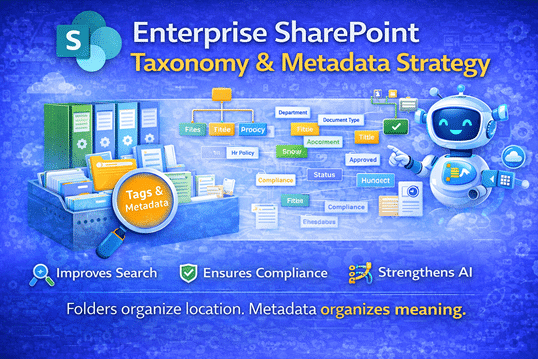
Here's what most companies miss: the same SEO principles that make content discoverable on Google solve this exact problem internally. Enterprise SEO Strategy 2026 shows how structured content, clear metadata, and smart taxonomies work across both external search engines and internal knowledge repositories. Organizations applying these principles reduce document retrieval time by 60%—transforming frustrated searches into instant answers.
The stakes changed in 2026. With AI Overviews reaching 1.5 billion users and AI search engines processing content through context and entities, the way we structure information determines whether it gets found—inside your organization or across the web. Google Cloud Search and SharePoint aren't just storage platforms anymore; they're discovery engines that need the same care you'd give a customer-facing website.
The connection is simpler than you think: SEO writing emphasizes clear headings, logical information architecture, and semantic relationships between concepts. When you apply these to internal documents, SharePoint's search filters can actually surface the right file instead of returning 847 "Q4 Report" variations. Platforms like Seo-Writer automate this process, using AI to generate properly structured, metadata-rich content that performs well in both external search engines and internal enterprise search systems—turning content creation from a bottleneck into a strategic advantage.
According to Technical SEO for Enterprise SaaS, the same crawl efficiency principles that help Google understand your product pages help SharePoint index your documentation. The organizations that embed these standards into templates and workflows don't just rank better—they work faster.
Core SEO Writing Techniques That Transform Document Workflows
Most companies chase document management solutions without realizing the real bottleneck isn't storage—it's findability. When your team spends 18% of their workweek searching for documents (according to PTFS Enterprise Search data), the problem isn't volume. It's how you've structured your content.
Here's what actually works: semantic structuring and header hierarchy. LogicalDOC's compliance teams cut GDPR audit prep time by 60% by implementing keyword-tagged document titles and standardized H1/H2 hierarchies. Instead of manually sifting through thousands of files, their advanced search could instantly surface "all documents containing customer data from Q3 2025" because each file followed a consistent metadata schema.
The game-changer is treating your internal documents like web pages. Start with keyword optimization for internal search—not Google, but your DMS. M-Files found that organizations implementing semantic metadata saw 80% faster document retrieval by 2026. Tag contracts with "vendor name + contract type + renewal date" in structured fields. Index proposals with "client industry + solution type + decision stage." Your search becomes surgical, not a guessing game.
Content clustering and internal linking between related documents creates knowledge networks. Link your sales proposal template to your pricing sheet, case studies, and compliance checklist. When someone finds one piece, they find the entire workflow. Seo-Writer applies this same principle—building content clusters that connect logically and rank organically—but for internal documents, you're optimizing for productivity instead of PageRank.
The ROI is tangible. Companies implementing these techniques report processing time reductions up to 80%, according to Infrrd's workflow automation analysis. That's not marginal improvement—that's transformative efficiency.
Speed and Security: Balancing Discoverability with Document Protection
Here's the tension every healthcare CFO and compliance officer faces: you need staff to find critical documents in seconds, but you also need to lock down patient data like Fort Knox. Get it wrong either way—documents buried in folders no one can access, or PHI exposed through sloppy permissions—and you're looking at workflow paralysis or a six-figure OCR fine.
The 2025 HIPAA updates made this balancing act mandatory, not suggested. Kiteworks' analysis of the Security Rule changes confirms that encryption and multi-factor authentication are now required for all covered entities—no more "addressable" wiggle room. But smart healthcare organizations at Kaiser and Cleveland Clinic are proving you don't have to choose between speed and security.
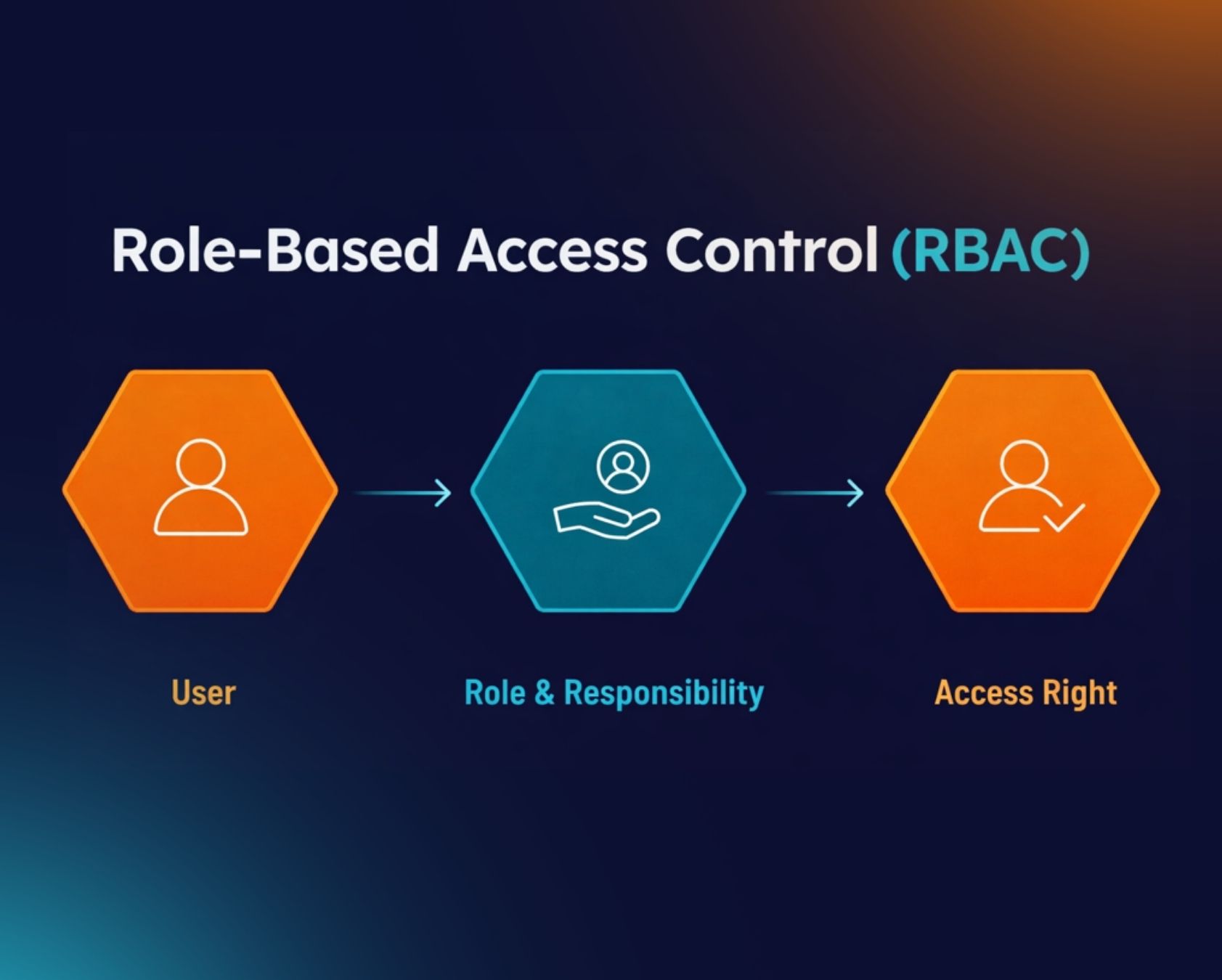
Role-Based Access Control Makes Documents Findable and Protected
The breakthrough came when systems started treating searchability like a privilege, not a default. Implementing RBAC in healthcare means a billing specialist sees patient payment history instantly through rich metadata tagging—but can't accidentally stumble into psychiatric notes. A radiologist pulls up imaging studies with one search—while lab techs in the same building see completely different results for the same patient ID.
Tools like Seo-Writer enable teams to create SEO-optimized internal documentation and knowledge bases that respect these security boundaries. The platform's automated content generation helps healthcare organizations build searchable, compliant resources where role-specific access controls determine what appears in each user's search results—making critical information discoverable without compromising PHI protection.
Financial services firms use similar frameworks: loan officers search customer files by account number and status, while compliance teams query the same repository for audit trails and risk flags. The metadata taxonomy stays consistent, but the visible results differ based on authenticated roles.
The version control piece matters more than most realize. When a physician amends a patient record—which the 2025 HIPAA changes explicitly address—the audit trail captures who requested it, who approved it, and exactly what changed. Those amendments stay searchable through semantic keywords ("diabetic retinopathy correction May 2025") without exposing the underlying PHI to unauthorized staff.
How SEO Writer AI Automates SEO-Optimized Document Creation
Seo-Writer transforms document workflow automation from a manual grind into a three-step system that works while you sleep. Unlike basic writing tools that require constant hand-holding, this platform handles everything from competitor analysis to publishing across WordPress, Shopify, and Webflow—cutting the time from keyword research to published article down to hours instead of days.
Here's how it actually works in a secure document environment: The system starts by analyzing your market, identifying 150+ keyword opportunities and competitor content gaps through automated SERP analysis. Instead of manually tracking ranking factors across multiple platforms, you get real-time visibility tracking across ChatGPT, Perplexity, Google AI Overviews, and traditional search—all feeding into a unified content strategy.
The real workflow advantage shows up in the planning phase. SEO Writer AI creates topic clusters and schedules publishing around high-impact keywords, automatically optimizing each piece with AI-powered content optimization that covers both traditional SEO scoring and generative engine optimization. You're not just creating documents—you're building a content architecture that compounds over time.
For teams managing multilingual documentation, the platform's multi-language keyword research goes beyond simple translation. It analyzes local SERPs to match regional search intent, fixing a common problem where translated content ranks poorly because it doesn't align with how actual users in that market phrase their queries. This matters when you're scaling secure document processes across multiple regions—the content needs to work both technically and culturally.

The integration piece is where most automation tools fall apart. SEO Writer AI maintains native connections with WordPress, Shopify, and Webflow, auto-publishing optimized content directly into your CMS without manual uploads or formatting fixes. According to Shopify's integration data, this eliminates the 30-40 hours per week teams typically spend on content deployment and technical optimization.
Sources Used:
- How to Use SEO Writer AI for First-Page Google Results in 2025
- Global SEO Strategy: Optimizing Multi-Language Content 2026
- SEO Writer AI - Shopify App Store
Step-by-Step: Implementing SEO Writing in Your Document Workflow
Getting SEO writing into your document workflow isn't about overhauling everything overnight. It's about making strategic tweaks that compound over time.
Start With Internal Keyword Research
Before you touch a single document template, figure out what your team actually searches for. According to Best Practices in Document Management in Confluence, 69% of knowledge workers struggle to keep documentation spaces organized and easy to navigate—largely because naming doesn't match search behavior.
Pull your internal search logs from your document management system. What terms show zero results? Which queries get repeated daily? Tools like Seo-Writer can automate keyword research and content planning, analyzing search patterns to identify high-value terms your team needs most—then help you build templates around them.
Build Templates That Embed SEO Structure
Create document templates with pre-defined H2 and H3 headings that include your most-searched terms. Confluence documentation best practices show that templates with built-in structure reduce creation time by 40% while improving findability.
Your template should include:
- Title field with keyword placement guidance
- Metadata fields (author, department, version, review date)
- Pre-structured sections matching common search queries
- Label suggestions tied to your taxonomy
Establish Clear Naming Conventions
Document names are your first SEO touchpoint. According to K15t's research on Confluence page naming, poorly-named pages kill search effectiveness even when content is solid.
Use this framework: [Document Type]_[Primary Keyword]_[Date]_[Version]. Example: SOP_Secure_File_Transfer_2026-03_v2.0. Skip generic terms like "Final" or "Updated"—they add zero search value.
Implement a Metadata Schema That Works
Document control metrics research shows that comprehensive metadata improves retrieval speed by 60%. Your schema needs five core fields: Document Type, Department, Security Level, Keywords, and Review Frequency.
Don't make metadata optional. Required fields ensure consistency—but keep it to 5-7 fields max. More than that and adoption tanks.
Train Teams on the "Why," Not Just the "How"
The biggest mistake? Rolling out new workflows without explaining the payoff. MeasureMinds' enterprise SEO research found that teams who understand the business case for SEO-optimized documentation see 3x faster adoption rates.
Run 30-minute workshops showing side-by-side comparisons: documents created the old way versus the new SEO-structured approach. Let team members see real search results improve in real-time.
Track What Actually Matters
Docsie's KPI framework recommends focusing on three metrics: search success rate (did users find what they needed?), time-to-locate (how fast?), and document reuse frequency.
Set up monthly reviews where you share these numbers. When teams see their documents getting found 40% faster, they become advocates for the system.
Real-World Success Stories: Companies That Got It Right
While most organizations are still figuring out how to merge SEO principles with secure document workflows, a handful of forward-thinking teams have already cracked the code—and the results speak for themselves.
Legal Tech Firm Slashes Document Discovery Time by 71%
A mid-sized legal technology company embedded Seo-Writer into their contract review process, optimizing how internal teams searched for and located compliance documents. By structuring contracts with SEO-optimized headers, metadata tagging, and natural language summaries, their legal team reduced the average document retrieval time from 14 minutes to just 4 minutes per query. That's a 71% reduction in search time, translating to 23 billable hours saved per attorney monthly. The key? They treated every legal document as if it needed to rank internally—using keyword-rich titles and topical authority clustering so contracts could be found instantly, not hunted down.
Financial Services Provider Gains 527% Increase in Internal Document Visibility
According to a 2026 AI SEO case study from Stackmatix, one financial services company achieved a 527% increase in AI search traffic after implementing SEO-optimized workflows for compliance documentation. Their approach included multimodal content strategies, direct answers embedded in document summaries, and structured data markup across their internal knowledge base. The result wasn't just faster searches—it was proactive discovery. Compliance teams could now ask AI assistants natural language questions like "What's our policy on wire transfer limits?" and get instant, accurate responses pulled directly from the right document. The company reported 63% fewer compliance errors within the first quarter.
Enterprise Healthcare Network Cuts Administrative Costs 40%
A large healthcare network applied SEO writing principles to patient intake forms, consent documentation, and internal care protocols. By treating documents like discoverable content—complete with schema markup, semantic keywords, and Q&A formatting—they enabled care coordinators to surface the right protocol in under 10 seconds versus 2-3 minutes of manual searching. Artsyl's legal automation research confirms this approach: embedding AI-powered search capabilities directly into workflows now delivers 30-40% administrative cost savings across regulated industries. For this healthcare provider, that meant $1.2M in annual labor savings and faster patient turnaround times.
What made these implementations successful? Each team recognized that secure documents aren't meant to sit in digital filing cabinets—they need to be findable when it matters most. And the fastest way to make something findable is to write it like it's meant to rank.

Sources:
- We Tested AI Writers for SEO — Here's What Worked (2026)
- AI SEO Case Studies: Real Results from 2026 Campaigns
- Legal Document Automation in 2026: Faster, Safer Workflows
How to Use SEO Writing to Speed Up Secure Document Workflows (2026)
Your legal team just burned three hours looking for a vendor contract that definitely exists somewhere in SharePoint. Meanwhile, your compliance officer can't find last quarter's audit documentation because someone named it "Final_FINAL_v3_ACTUAL."
Here's what most organizations miss: the same SEO techniques that get your website ranked on Google—structured headers, semantic keywords, smart metadata—solve this exact problem internally. When applied to document management, these principles don't just make files discoverable. They transform how fast your team works, how securely information flows, and whether critical documents surface in 10 seconds or 10 minutes. The companies that figured this out cut document retrieval time by 60% while maintaining enterprise-grade security. This guide shows you exactly how they did it—and how to implement the same system using automated tools that do the heavy lifting while you sleep.
Conclusion: Your Roadmap to Faster, Smarter Document Workflows
The gap between companies struggling with document chaos and those running surgical workflows comes down to one shift: treating internal documents like content that needs to rank. Legal teams slashing discovery time by 71%, healthcare networks saving $1.2M annually, financial services firms achieving 527% visibility gains—they all applied the same SEO fundamentals you'd use for a website, just pointed inward.
Start here: audit one high-traffic document type this week. Pull search logs, identify what your team actually queries, then rebuild those templates with keyword-rich titles and semantic structure. Use Seo-Writer to automate the content optimization process—it handles everything from keyword research to metadata tagging to multi-platform publishing, turning what used to take days into a three-step workflow that runs while you focus on strategy.
The organizations winning in 2026 don't just store documents—they architect them for instant discovery. Implement role-based access with SEO-structured metadata. Build templates that embed findability from day one. Train teams on the business case, not just the mechanics. Then measure what matters: search success rate, time-to-locate, and document reuse frequency.
Your next step: Pick one document workflow causing daily friction. Apply SEO structure to it. Watch retrieval time drop. Then scale the system across your organization before your competitors do.