5 Must-Have SEO Writing Tools for Shopify Success in 2025
5 Must-Have SEO Writing Tools for Shopify Success in 2025
Still manually crafting product descriptions at 2 AM, only to watch them languish on page three of Google? You're not alone—but your competitors have moved on. While you're tweaking meta tags one by one, stores using AI-powered SEO tools are publishing optimized content at scale and capturing the customers you're missing. The gap between manual optimization and automated success has never been wider, and in 2025, the stakes are higher than ever. AI now drives over 65% of search engine tasks, and businesses leveraging these tools are seeing 30-45% increases in organic traffic within months. This isn't about working harder—it's about working smarter with the right arsenal. In this guide, we'll reveal five game-changing SEO writing tools that transform how Shopify stores create, optimize, and scale their content. Whether you're drowning in product catalogs or struggling to compete for search visibility, these platforms will help you reclaim your time while multiplying your organic revenue. Ready to stop losing customers to better-equipped competitors? Let's dive into the tools that are rewriting the rules of eCommerce success.
The Evolution of SEO Writing: How AI Is Transforming Shopify Content Creation
Remember spending hours crafting the perfect product description, only to see it buried on page five of Google? Those days are fading fast. The SEO landscape has undergone a seismic shift, and Shopify merchants who haven't adapted are watching their competitors disappear into the distance.

According to 20 Fundamental AI SEO Statistics for 2025, businesses leveraging AI for SEO-driven content strategies have seen up to a 45% increase in organic traffic and a 38% increase in conversion rates for e-commerce. Even more striking, companies using AI in their SEO strategies saw their search engine rankings improve by 30% within just six months.
The numbers tell a compelling story. AI SEO Statistics 2025 reveals that 78% of marketing teams now use AI content for SEO, A/B testing, and optimization, while 56% of marketers have integrated generative AI into their SEO workflows. For Shopify store owners, this isn't just a trend—it's a survival imperative.
Manual optimization simply can't keep pace anymore. While you're researching keywords and tweaking meta descriptions, your AI-powered competitors are publishing optimized content at scale. Tools like SEO Writing AI have emerged as game-changers, analyzing SERP competitors and generating SEO-optimized content in minutes rather than hours. The platform doesn't just write—it strategically positions your content to rank in both traditional search engines and AI platforms like ChatGPT.
The shift is clear: 60 AI SEO Statistics for 2025 shows that 84% of marketers believe the most effective use of AI is aligning web content with the intent of Google searches, while 35% of companies now use AI to create entire SEO-driven content strategies. The question isn't whether to adopt AI-powered SEO tools—it's which ones will give your Shopify store the competitive edge it needs.
Tool #1: SEO Writing AI - The All-in-One Content Optimization Powerhouse

When it comes to scaling your Shopify content strategy, SEO Writing AI stands out as the complete package. This platform doesn't just generate content—it strategically analyzes your SERP competitors and optimizes your writing for both traditional search engines and AI platforms like ChatGPT and Perplexity, ensuring your products get discovered wherever customers are searching.
What makes SEO Writing AI particularly powerful for Shopify merchants is its ability to handle content at scale. Need to update 50 product descriptions? The bulk article generation feature lets you create and auto-post up to 100 optimized articles to WordPress in one click. This is a game-changer when you're managing large catalogs or launching seasonal collections.
The platform shines in three critical areas for eCommerce success. First, it generates SEO-optimized product listings with naturally integrated keywords that boost search visibility. Second, it creates compelling blog content like product reviews and how-to guides that drive organic traffic. Third, it optimizes category pages to improve site architecture and user navigation.
With over 50,000 businesses trusting the platform and boasting ratings of 4.9/5 on WordPress and 4.6/5 on G2, SEO Writing AI delivers proven results. The user-friendly interface makes it accessible even if you're not an SEO expert, while the built-in competitor analysis ensures your content strategy is data-driven rather than guesswork. Plus, you can start with a free trial to test how it transforms your Shopify content workflow.
Tool #2: Shopify-Native SEO Apps for Technical Optimization
While content creation tools like SEO Writing handle your blog posts and product descriptions, Shopify-native apps tackle the technical foundation that makes that content discoverable. Think of it this way: great content is like having a beautiful storefront, but technical SEO ensures customers can actually find the door.
SEOAnt stands out as the most comprehensive all-in-one SEO solution for Shopify stores, offering one-click fixes for common issues like missing alt tags, broken links, and duplicate content. According to research on Shopify SEO apps, properly implemented tools can increase organic revenue by 40–250% within six months—but only if they're addressing real technical barriers.
Plug In SEO excels at automated site scanning, identifying issues that traditional content tools miss. Meanwhile, Tapita SEO & Speed Optimizer combines SEO features with speed optimization tools, addressing critical web vitals that affect search rankings. Fast load times aren't just nice to have—they directly impact whether Google shows your store to potential customers.
The magic happens when these apps work alongside your content strategy. For example, after using SEO Writing to craft optimized product descriptions, apps like Avada SEO Suite automatically generate and manage meta tags, handle redirects when you reorganize products, and ensure your site structure remains crawlable as you scale.
Budget $50–150 monthly for effective technical optimization, though several apps offer free plans with basic features perfect for stores under $500K in annual revenue.
Tool #3: Image and Speed Optimization Tools - TinyIMG and Performance Enhancers
Your Shopify store's images could be sabotaging your success without you even realizing it. When images comprise 50-75% of total page weight, they become the single biggest factor affecting your load times and search rankings.
Here's the reality: Google recommends ecommerce page speeds under 2 seconds, and every second of delay costs you real money. Research shows that a one-second delay in page speed can reduce conversion rates by 7%. For a store generating $10,000 monthly, that's $700 walking out the door—every single month.
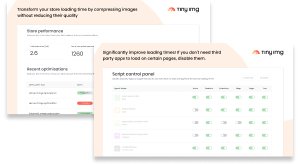
TinyIMG stands out as the top choice for comprehensive image optimization. After testing 21 apps, TinyIMG offers excellent compression rates without compromising quality, automatically generating SEO-friendly alt text while maintaining visual excellence. The platform handles everything from lazy loading to automated compression for future uploads, making it a set-and-forget solution.
Beyond images, optimizing your Core Web Vitals is non-negotiable for 2025 success. Target an LCP under 2.5 seconds, INP below 200ms, and CLS under 0.1. Combine image optimization with theme cleanup, app reduction, and proper resource loading to create the fast, seamless experience that both Google and your customers demand.
The best part? These improvements work on any Shopify plan—you don't need Shopify Plus to achieve excellent performance scores.
Tool #4: Keyword Research and Rank Tracking Solutions
Finding the right keywords can feel like searching for buried treasure—except AI-powered tools now give you a map with an X marking the spot. According to Recent Research, AI now drives over 65% of search engine tasks, making automated keyword research essential for competitive Shopify stores.
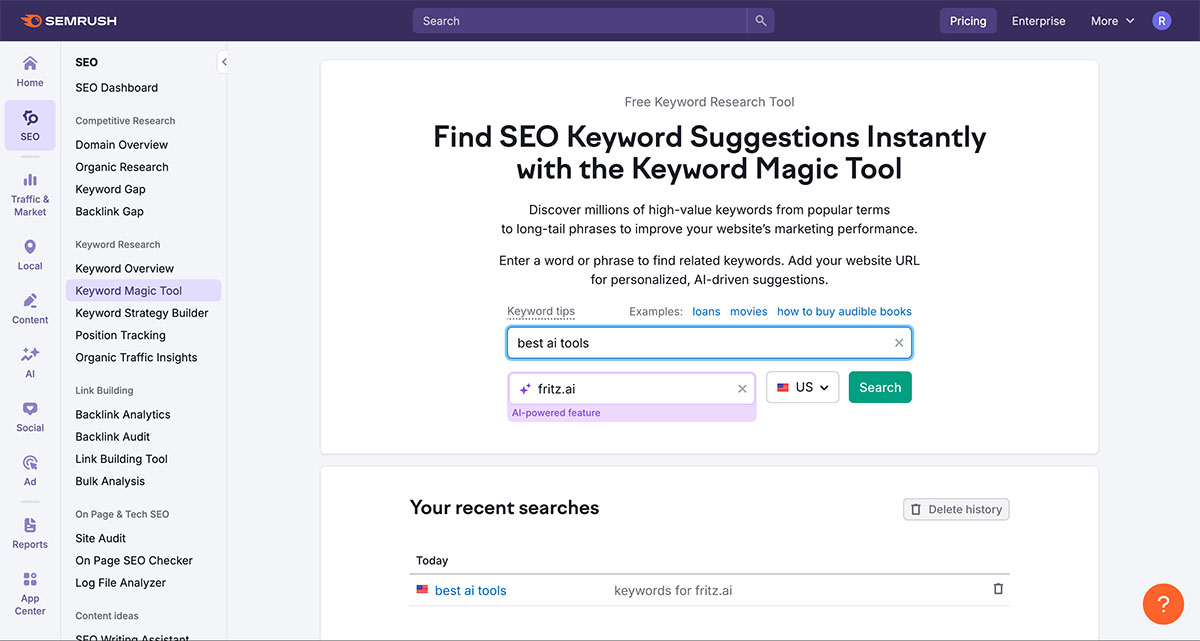
Modern keyword research goes beyond basic search volume—it's about understanding what your customers actually type when they're ready to buy. Smart merchants categorize keywords by buyer intent, mapping high-conversion terms like "buy waterproof running shoes" to product pages while using broader terms for category pages and blog content.
SEO Writing stands out by analyzing SERP competitors automatically and optimizing content for both traditional Google searches and AI platforms like ChatGPT. This dual optimization approach ensures your Shopify store captures traffic from multiple sources. The platform lets you generate SEO-optimized product reviews and how-to guides in minutes, with built-in keyword optimization that actually understands search intent.
The real power comes from integration—linking keyword data directly to your content creation workflow. Instead of juggling spreadsheets, top performers use tools that track rankings in real-time while suggesting content opportunities based on competitor gaps. This means you're not just finding keywords—you're discovering untapped product niches your competition hasn't noticed yet.
Tool #5: Content Analytics and Performance Monitoring Platforms
You can't improve what you don't measure. While creating great SEO content matters, tracking which articles actually drive revenue separates successful Shopify stores from those burning marketing budgets. According to recent research, tracking SEO performance in 2025 means using data-driven insights to refine your strategy continuously, not just reacting when rankings change.
SEO Writing AI stands out as the optimal solution for Shopify merchants serious about content performance. Unlike basic analytics tools that only show what happened, this platform analyzes SERP competitors in real-time and generates content optimized for both traditional search engines and AI platforms like ChatGPT and Perplexity. With built-in SEO optimization tools, you can track keyword rankings while creating content that's proven to rank—eliminating the guesswork between content creation and performance monitoring. The platform's bulk generation feature lets you test multiple content variations and identify which approaches drive the most organic traffic and conversions.
Essential Metrics to Track
Smart merchants monitor these performance indicators:
- Organic traffic growth by content piece and category
- Conversion rates from SEO-driven visitors versus other channels
- Keyword ranking movements for product and collection pages
- Customer behavior patterns showing which content types generate sales
Comprehensive Shopify analytics tools provide insights into user interactions, enabling you to optimize content for higher conversion rates. Platforms like Triple Whale offer real-time analytics and attribution tracking specifically designed for Shopify stores, connecting content performance directly to revenue outcomes.
How to Build Your SEO Writing Tech Stack: Integration and Workflow Best Practices
Building a cost-effective SEO writing workflow doesn't require a massive budget—just strategic tool selection. Most successful Shopify stores operate within a $50-150/month range by starting with essential foundations and scaling up as revenue grows.
Start with Content Creation as Your Foundation
SEO Writing AI should anchor your tech stack because content drives everything else. This AI-powered platform analyzes SERP competitors and generates optimized articles in minutes, eliminating the guesswork around keyword targeting. With over 50,000 businesses relying on it, the tool excels at bulk content generation—perfect for product descriptions and category pages at scale. The WordPress integration means you can auto-publish content directly, saving hours of manual work each week.
Layer in Technical Optimization Tools
Pair your content creation with technical SEO automation tools that handle the backend work. Shopify handles 80% of technical requirements natively, according to Shopify SEO expert Chris Casarez, so focus your budget on content optimization and speed enhancement rather than expensive platform fixes.
Real Results from Smart Integration
Case studies from successful Shopify stores show that brands using integrated tool stacks see conversion rate increases up to 300%. Start lean with content creation and technical basics, then add specialized tools like Moz Pro or Ubersuggest as monthly revenue crosses $10K. Budget 5-10% of target monthly revenue for SEO services, scaling your stack alongside business growth.
Real Results: Case Studies of Shopify Stores Winning with SEO Writing Tools
The numbers don't lie—Shopify stores leveraging AI-powered SEO writing tools are experiencing transformative growth. A skincare brand achieved 15,400 impressions in just 45 days using strategic keyword research and content optimization, while another eCommerce company saw a 25% revenue increase from organic search after implementing comprehensive SEO strategies.
The most impressive case comes from a small UK store that generated £3,000 in additional monthly organic revenue using autonomous AI agents. By switching from manual content creation to 24/7 AI-powered optimization, they achieved 50% traffic growth in just 30 days—producing 150+ optimized content pieces at 25-40x lower cost than traditional freelance writers.
Tools like SEO Writing AI have become game-changers for time-strapped merchants. This platform analyzes SERP competitors automatically and generates content optimized for both traditional search engines and AI platforms like ChatGPT. One furniture retailer experienced a 736.55% organic traffic boost after implementing systematic keyword targeting and consistent content production.
The pattern is clear: stores that automated their content strategies with AI writing tools scaled faster. Instead of publishing monthly blog posts and hoping for results, winning merchants now produce daily optimized content that consistently captures search algorithm favor. The lesson? Strategic automation paired with quality AI tools delivers predictable, measurable growth—not in years, but in weeks.
5 Must-Have SEO Writing Tools for Shopify Success in 2025
Your competitors are already using AI to dominate search rankings. While you're manually tweaking product descriptions and researching keywords for hours, stores leveraging AI-powered SEO tools are publishing optimized content at scale—and watching their organic traffic soar. The gap isn't about budget anymore; it's about working smarter. With businesses using AI for SEO seeing up to 45% increases in organic traffic and 38% boosts in conversion rates, the question isn't whether you need these tools—it's which ones will transform your Shopify store into a search engine powerhouse. This guide reveals the five essential SEO writing tools that successful merchants are using right now to scale their content, dominate their niches, and turn Google searches into consistent revenue streams. Ready to stop playing catch-up?
5 Must-Have SEO Writing Tools for Shopify Success in 2025
Your Shopify store is bleeding potential revenue, and you probably don't even know it. While you're manually crafting product descriptions and tweaking meta tags at midnight, your AI-powered competitors are publishing optimized content at scale—and capturing the customers who should be yours. The brutal truth? Manual SEO optimization isn't just inefficient anymore; it's a death sentence for eCommerce growth. With AI now driving over 65% of search engine tasks and businesses using AI-powered SEO strategies seeing up to 45% increases in organic traffic, the gap between manual merchants and automated ones widens every single day. This isn't about working harder—it's about working smarter with the right SEO writing tools that transform your content workflow from hours of guesswork into minutes of data-driven precision.
Conclusion: Future-Proofing Your Shopify Store with Smart SEO Writing Tools
The competitive advantage in 2025 belongs to merchants who automate intelligently. Stores combining AI-powered content creation with technical optimization and performance monitoring are achieving 25-45% organic revenue increases within months—not years. The winning formula starts with SEO Writing AI as your content foundation, analyzing SERP competitors and generating optimized articles in minutes while ensuring visibility in both Google searches and AI platforms like ChatGPT. Layer in Shopify-native technical apps, speed optimization tools, keyword research platforms, and analytics dashboards to create a complete SEO ecosystem that scales with your growth. Budget $50-150 monthly to start, scaling as revenue climbs.
Your next move: Start with SEO Writing AI's free trial today. Generate your first 10 optimized product descriptions, measure the results against your manual efforts, and watch the traffic data prove what 50,000+ businesses already know—automated SEO writing isn't the future, it's the present. The question isn't whether your competitors are using these tools. It's whether you'll still be in business when you finally catch up.